One Batch of Pneumatic Sludge Transfer Pump for Overseas Customer

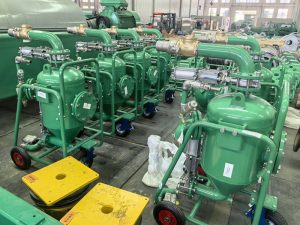
A shipment of sludge vacuum pumps manufactured by GN Separation & Conveying has been delivered to overseas customers, marking another export order for air-operated solids transfer equipment in the environmental and oilfield waste management sector.

The pumps are designed to handle high-solids, high-viscosity materials that conventional centrifugal or screw pumps struggle to transport efficiently. The core technology is a fully pneumatic vacuum pump that uses compressed air to create negative pressure, drawing slurry into the chamber and then discharging it through air pressure. This cycle repeats continuously, allowing for reliable transfer of materials that would otherwise clog or damage standard pumping equipment.

The decision to use air-operated vacuum pumps rather than electric or diesel-driven alternatives reflects specific operational requirements. In explosive or hazardous environments such as offshore platforms and oil and gas fields, the absence of electrical components eliminates ignition risks and simplifies compliance with safety regulations. The pumps also have no internal rotating parts, which reduces mechanical wear, prevents cavitation and dry-run damage, and lowers maintenance costs over the equipment’s service life.
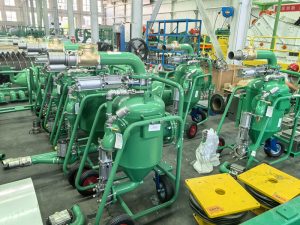
The shipped units are constructed from stainless steel and feature triple-sealing technology to prevent leakage during operation. This is particularly relevant for applications involving oily sludge, drilling cuttings, and chemical waste, where containment is both an environmental and safety concern. The pumps can handle solid particles up to 50 mm or 75 mm depending on the model, with solids content reaching as high as 80 percent in some slurry compositions.

Three standard capacity models are available: 10 cubic meters per hour, 20 cubic meters per hour, and 40 cubic meters per hour. Each model requires different air pressure and volume inputs, and customers typically source air compressors locally to reduce shipping costs and simplify maintenance. The pumps operate on a simple cycle: suction, discharge, and repeat, with adjustable timing to match specific material characteristics and project requirements.

The export order includes units destined for customers in Europe, the Middle East, and Asia. Previous deliveries of similar equipment have been used in tank bottom sludge removal, drilling waste transfer, mining tailings handling, and long-distance slurry transport between pits and rig sites. In several cases, customers reported that the vacuum pumps resolved persistent problems with blockages and excessive downtime that had plagued their previous pumping systems.
GN Separation & Conveying, based in Langfang near Beijing, has manufactured separation and conveying equipment for 13 years. The company operates three production facilities and maintains branch offices in Moscow and Houston to support international sales and service. Its product line includes centrifuges, disc separators, sludge vacuum pumps, oil-water separators, and screw conveyors. The company exports to markets including the United Kingdom, Norway, Greece, Portugal, Russia, Mexico, India, Malaysia, Nigeria, Mozambique, Mongolia, the United Arab Emirates, Oman, and Saudi Arabia.

For this particular shipment, the pumps were configured to meet the customer’s specifications for material composition, transfer distance, and discharge height. GN offers testing services where customers can send material samples to verify pump performance before finalizing equipment selection. This approach reduces the risk of mismatch between equipment capabilities and actual operating conditions.

The global market for sludge and solids transfer equipment continues to grow as environmental regulations tighten and industrial operators seek to reduce waste handling costs. Traditional methods of moving high-solids slurries often involve manual labor, expensive trucking, or complex conveyor systems that require significant infrastructure. Vacuum-based transfer offers a flexible alternative that can be deployed in remote locations, confined spaces, and hazardous areas without extensive site preparation.

Air-operated vacuum pumps also align with broader trends in industrial equipment design: fewer moving parts, lower energy consumption, and simplified maintenance. Since the pumps do not require priming and can run dry without damage, they are less vulnerable to operator error and unexpected process upsets. The absence of electrical motors also means the equipment can operate in areas without reliable power supply, which is common in oilfields, mining sites, and temporary waste treatment facilities.

The shipment reflects the ongoing internationalization of Chinese industrial equipment manufacturers. Companies like GN Separation & Conveying compete not only on price but also on technical capability, customization, and after-sales support. Export orders to established markets in Europe and the Middle East indicate that these manufacturers have met the quality and reliability standards required by international customers.

For the receiving customers, the vacuum pumps are expected to improve waste handling efficiency, reduce labor requirements, and lower long-term maintenance costs compared to alternative pumping technologies. The equipment will be integrated into existing waste management systems, where it will transfer sludge from collection points to storage tanks, processing units, or disposal sites.

GN Separation & Conveying continues to accept orders for sludge vacuum pumps in various configurations and capacities. The company provides technical consultation to help customers select the appropriate model based on material properties, transfer distance, and site conditions.
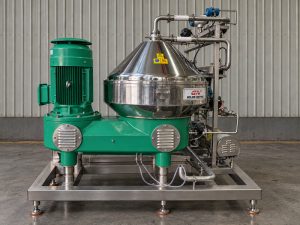
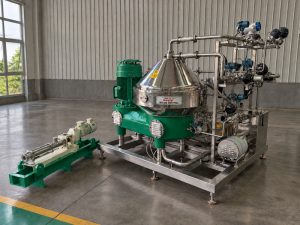
Seaweed processing in Southeast Asia has expanded rapidly over the past decade, driven by growing global demand for sustainable proteins, bioactive compounds, and bio-based materials. The region’s warm coastal waters and established aquaculture infrastructure make it a major supplier of both macroalgae and microalgae. However, the downstream processing of seaweed biomass presents persistent engineering challenges, particularly in the solid-liquid separation stage. GNL 2-phase disc centrifuges have emerged as a practical solution for these separation tasks, and their deployment in Southeast Asian seaweed projects reflects a broader trend toward high-efficiency mechanical separation in marine bioprocessing.

Seaweed slurries differ significantly from conventional fermentation broths or wastewater streams. They typically contain fine cellular particles, often in the micron range, suspended in a liquid phase that carries dissolved polysaccharides and other viscous compounds. These characteristics create two immediate problems: slow gravitational settling and a tendency for the solid phase to foul or clog separation equipment. In many Southeast Asian operations, seaweed is harvested or cultivated in dilute suspension, meaning the initial solid concentration is low. Recovering this dilute biomass efficiently is essential because the cost of dewatering directly affects the economics of downstream drying, extraction, and product formulation.

The target of separation in a typical project is straightforward: concentrate the algal cells or fragments into a high-solids stream while producing a clarified liquid that can be discharged or recycled. A 2-phase disc centrifuge is well suited to this task because it separates based on density difference under high centrifugal force, without requiring chemical pretreatment or excessive thermal input.

A disc centrifuge operates by feeding slurry into a rapidly rotating bowl that contains a stack of conical discs. These discs divide the internal volume into narrow channels, reducing the distance a particle must travel before it reaches a settling surface. This design dramatically increases the effective settling area within a compact machine footprint. Under centrifugal acceleration, denser particles—in this case, seaweed cells and cell debris—migrate outward and collect along the disc surfaces, eventually sliding toward the bowl wall. The lighter liquid phase moves inward and exits through a separate outlet.

The 2-phase configuration means the machine produces two streams: a concentrated solids phase and a clarified liquid phase. For seaweed slurries, this is often the preferred arrangement because the goal is biomass recovery rather than simultaneous oil or solvent separation. Solids discharge can be automated, with the bowl opening at set intervals to eject accumulated solids while the machine continues running. This feature is particularly important when processing slurries with variable solid loads, as it prevents blockages and maintains consistent throughput.

Seaweed slurries are not uniform, and a disc centrifuge must be adjusted to handle their specific properties. Several design and operational parameters matter:

Disc spacing and angle determine how effectively fine particles can settle and slide. If the spacing is too wide, settling efficiency drops; if too narrow, viscous slurries may bridge the gaps. The disc angle must allow settled solids to slide downward under centrifugal force, which requires the tangent of the angle to exceed the friction coefficient between the particle and the disc surface.

Surface finish on the discs affects fouling. Smooth surfaces reduce drag and minimize the adhesion of sticky polysaccharides, which are common in seaweed extracts.

The liquid-level ring and gravity ring at the outlet can be adjusted to shift the separation interface. In practice, this is one of the most useful tuning points for seaweed processing, because the viscosity of the liquid phase changes with temperature and composition. By adjusting the outlet geometry, operators can produce either a drier solids concentrate or a clearer liquid, depending on which output is more valuable at a given stage.

Temperature control is another practical consideration. Warming the feed slightly reduces viscosity and improves separation, but excessive heat can degrade heat-sensitive compounds such as pigments or omega-3 fatty acids. The centrifuge itself does not generate significant heat, so temperature management is mainly a matter of controlling the feed condition.

Modern disc centrifuges for industrial seaweed processing are typically equipped with PLC-based control systems and human-machine interfaces. These systems manage feed rate, bowl speed, and solids discharge intervals. Variable-frequency drives allow the bowl speed to be adjusted for different slurry types, which is useful when a facility processes more than one seaweed species. Automated discharge reduces labor and ensures consistent operation over long production runs. Remote monitoring and fault diagnostics further reduce downtime, which is a meaningful advantage in remote coastal locations where technical support may be limited.

The economic case for disc centrifuges in seaweed processing rests on several factors. First, they achieve high recovery rates, often approaching complete capture of suspended solids, even when the feed is dilute. This is important because the biomass itself is the product; losses at the separation stage cannot be recovered later. Second, the solids concentrate produced by a disc centrifuge typically has a higher dry matter content than what is achievable with gravity settling or simple filtration. This reduces the energy required for subsequent drying, which is often the largest operating cost in seaweed processing. Third, the continuous operation and automated discharge reduce labor requirements compared to batch methods such as filter presses or settling tanks.

Energy consumption is also favorable. A disc centrifuge uses centrifugal force rather than heat or vacuum to achieve separation, and the specific energy consumption per unit of solids recovered is relatively low. For a typical Southeast Asian seaweed project, the combination of high recovery, low labor, and reduced drying load can translate into substantial savings over the life of the equipment.

Seaweed slurries are often saline and slightly acidic, so contact parts must be corrosion-resistant. Stainless steels such as SS304 or SS316L are standard, and duplex stainless steel may be specified for particularly aggressive conditions. The bowl and discs must be precisely machined and balanced to withstand high rotational speeds without vibration. Manufacturing quality directly affects service life and separation performance, so equipment sourced from established suppliers with verified machining capabilities is preferable.

Introducing a disc centrifuge into an existing seaweed processing line requires attention to upstream and downstream integration. Feed should be screened or pre-filtered to remove large debris that could damage the bowl or block the discs. Flow rate should be controlled to match the machine’s capacity, since overfeeding reduces separation efficiency and underfeeding wastes capacity. Regular cleaning and inspection are necessary, particularly when processing slurries with high polysaccharide content, because sticky deposits can accumulate on disc surfaces over time.

It is also advisable to conduct bench-scale or pilot-scale separation tests with the actual seaweed slurry before full-scale installation. Slurry properties vary by species, harvest season, and pretreatment method, so operating parameters optimized in one location may not transfer directly to another. Working with the equipment supplier to establish the correct bowl speed, feed rate, and discharge interval for the specific material is a practical step that improves outcomes and reduces startup problems.

GNL 2-phase disc centrifuges offer a technically sound and economically viable approach to seaweed slurry separation in Southeast Asian projects. Their ability to handle fine, viscous, and dilute suspensions makes them suitable for a range of seaweed types and processing scales. With appropriate attention to disc design, outlet configuration, temperature control, and automation, these machines can deliver high biomass recovery, reduced drying costs, and reliable continuous operation. As the region’s seaweed industry continues to grow, efficient mechanical separation will remain a critical link between cultivation and the production of higher-value algal products.

GN 5-Deck Stack Vibrating Screen for Overseas Customer

In late August 2026, Hebei GN Solis Control Co., Ltd. completed the shipment of a five-deck vibrating screen to an overseas client. The equipment, designed for mineral processing applications, represents a continuation of the company’s fifteen-year track record in vibration screening technology.

The five-deck vibrating screen is a high-frequency screening unit engineered for fine particle classification in mining operations. Its primary function is to separate crushed ore into multiple size fractions simultaneously, a process that is critical for downstream processing efficiency. The machine features five stacked screen decks, each with independently adjustable vibration parameters, allowing operators to optimize separation performance for specific ore types.

The structural design of the screen  for fatigue design and assessment of steel structures. Before manufacturing, the engineering team conducted finite element analysis to evaluate stress distribution and displacement across critical load-bearing components. This analytical approach identifies potential weak points in the frame before they become operational issues, a practice that reduces the likelihood of structural failure during continuous operation.

The screen’s vibration mechanism generates a complex spatial trajectory rather than a simple linear or circular motion. This characteristic enhances material dispersion across the screen surface, which improves the probability of fine particles reaching lower decks. The vibration frequency and amplitude can be adjusted to suit different material densities and moisture contents, providing operational flexibility across varied mining conditions.

A notable feature of this equipment is the quick-release screen deck system. Each deck uses mechanical gear mechanisms that allow operators to remove and replace screening media with a ratchet wrench. This design reduces downtime during screen changes from several hours to under one hour. In the event that the gear mechanism becomes damaged, the design still permits traditional hammer-and-wedge removal, ensuring that maintenance is never completely blocked by a single component failure.

The screen media itself uses polyurethane panels with high open-area ratios. This material choice balances wear resistance against screening efficiency. The panels are manufactured with precision tolerances to maintain proper tension across the deck, which is essential for accurate particle sizing. The bottom frame sealing strips use stainless steel, protecting against corrosion in environments where moisture and abrasive fines are present.

For this particular shipment, the equipment was configured to handle iron ore feed with a maximum particle size of 10 millimeters. The client specified a target separation at 0.5 millimeters, a requirement that the five-deck configuration can achieve with a processing capacity of approximately 50 tons per hour. The exact performance specifications were verified during factory testing before the unit was disassembled for shipping.

Quality control procedures for this export order included full assembly and no-load test runs at the manufacturing facility. During these tests, engineers measured vibration amplitude at multiple points across each deck to ensure uniform motion. They also checked for abnormal noise levels and verified that all safety interlocks functioned correctly. Only after passing these checks was the machine disassembled, surface-treated, and prepared for container loading.

The overseas shipment required coordination across multiple logistics stages. The five-deck screen was disassembled into major sub-assemblies that could be safely transported in standard shipping containers. Components were protected with corrosion inhibitors and shock-absorbing packaging to prevent damage during ocean transit. The shipment documentation included detailed assembly instructions, maintenance manuals, and a full parts list to support on-site reassembly.

This transaction reflects a broader trend in the mining equipment sector where clients increasingly demand machinery that combines high processing efficiency with reduced maintenance requirements. The five-deck configuration addresses this need by maximizing screening area per unit of floor space, which is particularly valuable in operations where plant footprint is constrained.

GN Separation’s ability to execute this order successfully stems from its established manufacturing processes and its experience in serving international markets. The company has previously supplied vibrating screens to operations in Europe, North America, Australia, and Africa. This geographic diversity has required the engineering team to design equipment that can operate reliably under different electrical standards, environmental conditions, and regulatory frameworks.

The completion of this shipment adds to the company’s growing portfolio of high-frequency screening installations overseas. As mining operations continue to process lower-grade ore bodies, the demand for efficient fine screening technology is expected to remain strong. Equipment that can achieve sharp separations at fine particle sizes while withstanding continuous operation will continue to find buyers in global markets.

GN Sludge Dewatering Centrifuge Package for Overseas WWTP

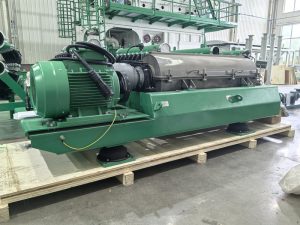
Decanter centrifuges have become a standard technology for sludge dewatering in modern wastewater treatment plants. Among the various models available, the GN Separation 14-inch (GNLW364-VFD) decanter centrifuge has gained notable traction in overseas markets, particularly for municipal and industrial sludge treatment applications. This article provides a technical overview of how this equipment functions and why it is suited for international wastewater projects.

The primary role of a sludge dewatering centrifuge is solid-liquid separation. In a wastewater treatment plant, sludge generated from primary and secondary settling tanks typically contains more than 95% water. Direct disposal of this sludge is impractical and costly due to its volume. The centrifuge reduces the water content, producing a cake that is easier to handle, transport, and dispose of, while the separated liquid (centrate) is returned to the treatment process for further clarification. The GN 14-inch model is designed to handle a throughput that suits medium-to-large scale plants, typically processing 20 to 50 cubic meters per hour depending on sludge type.

The operational principle is based on differential sedimentation. The equipment consists of a rotating bowl and an internal screw conveyor (scroll) that rotates at a slightly different speed.

  1. Feed and Acceleration: Sludge is pumped into the centrifuge through a stationary feed tube. It enters the rotating bowl assembly, where it is gently accelerated to avoid breaking the flocs that have been formed by polymer addition upstream.
  2. Sedimentation: Inside the cylindrical-conical bowl, the mixture is subjected to a centrifugal force that can exceed 3000 times gravity (up to 3000 RPM for this model). Under this force, suspended solids, which have a higher density than water, are rapidly deposited against the bowl wall.
  3. Conveyance and Dewatering: The screw conveyor, driven by a planetary gearbox (differential), rotates slightly slower (or faster) than the bowl. This relative motion pushes the settled solids toward the conical end (the beach) of the bowl. As the solids travel up the beach, they are exposed to the open air and further drainage occurs before they exit through discharge ports.
  4. Liquid Discharge: The clarified liquid, now free of suspended solids, overflows through adjustable weir plates at the opposite end of the bowl. The weir position controls the liquid pool depth, which is a critical parameter for optimizing cake dryness and centrate clarity.

The GNLW364-VFD model incorporates several features that address the specific challenges of overseas installations:

  • Material Selection: The bowl is manufactured from Duplex Stainless Steel 2205. This material offers high tensile strength and excellent resistance to chloride-induced stress corrosion cracking, making it suitable for sludges with high salinity or aggressive chemical content. The scroll blades are protected with tungsten carbide tiles or a wear-resistant coating to withstand abrasive grit often present in raw sewage.
  • Variable Frequency Drive (VFD) Control: The “VFD” in the model name indicates that the main motor speed is adjustable. This allows the operator to fine-tune the centrifugal force to match the specific sludge characteristics (e.g., biological sludge vs. chemical sludge). A separate back-drive system controls the differential speed between the bowl and the scroll. Precise control of this differential speed is essential for achieving consistent cake dryness without overloading the conveyor.
  • Compact Footprint: Compared to belt presses or filter presses, a centrifuge occupies significantly less floor space. For overseas projects where real estate is expensive or existing infrastructure is being retrofitted, this is a decisive advantage.

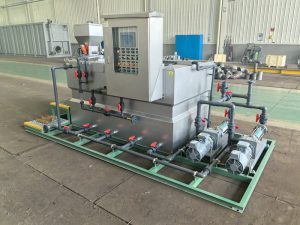
Successful operation requires proper integration with the upstream process. The centrifuge must be paired with a polymer dosing unit for flocculation. The performance is highly dependent on the polymer type and mixing energy. For overseas projects, GN Separation provides complete process engineering support, including the design of the feed pump, flocculant preparation system, and cake discharge conveyor.

In summary, the GN 14-inch decanter centrifuge serves as a robust and efficient solution for sludge volume reduction in overseas wastewater treatment plants. Its high centrifugal force, durable construction, and precise speed control enable operators to achieve dry solids content typically in the range of 20% to 30%, depending on the sludge type. This reduces disposal costs and contributes to the overall sustainability of the treatment facility