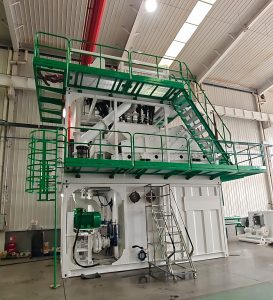
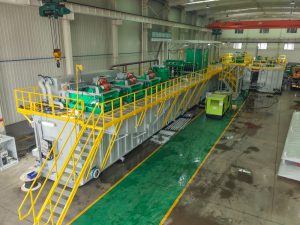
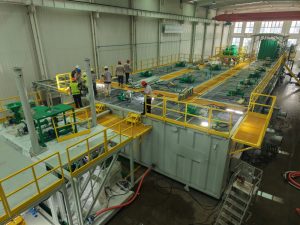
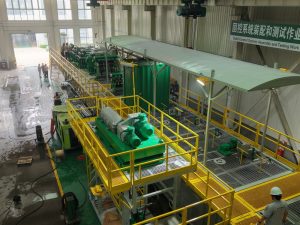
GN will Show at IFAT Munich 2026 in Germany this May

GN Company will participate in IFAT Munich 2026, the world’s leading trade fair for water, sewage, waste, and raw materials management. The event will take place from May 4 to May 7, 2026, at the Messe München exhibition center in Munich, Germany. Our booth will be located at A1, 104I. This participation represents a strategic step in our international expansion and aligns with our commitment to showcasing advanced environmental solutions on a global stage.

IFAT Munich is a premier event with a history spanning over six decades, organized by Messe München. It serves as a central hub for industry professionals, policymakers, and technology providers from across the globe. The 2026 edition is expected to host over 2,000 exhibitors and attract more than 100,000 professional visitors from more than 100 countries. The exhibition covers a comprehensive range of sectors, including water and wastewater treatment, solid waste management, recycling technologies, resource recovery, and digital solutions for environmental management. For GN, this provides an optimal platform to engage with international clients, observe emerging trends, and establish partnerships within the global environmental technology market.

Our focus at IFAT 2026 will be to present our core competencies and innovative systems in municipal and environmental engineering. This includes solutions for solid waste processing, sludge treatment, decentralized waste collection systems, and smart management platforms for urban services. We will demonstrate our integrated approach to projects, which combines practical engineering with sustainable operational models. The exhibition allows us to directly present our technical capabilities to European and international buyers, engineering firms, and municipal authorities who are seeking reliable and efficient environmental infrastructure solutions.

The global environmental sector is undergoing significant transformation, driven by stricter regulations, circular economy principles, and digitalization. Key trends such as high-value material recovery, energy-efficient wastewater processes, and IoT-based monitoring systems are reshaping industry standards. IFAT 2026 will feature dedicated zones and forums addressing these developments, including smart environmental technologies and circular economy innovations. Our participation enables us to align our R&D direction with these international trends, gain insights into EU regulatory frameworks, and identify potential areas for technological collaboration or adaptation.

From a business perspective, attending IFAT supports our strategic objective of expanding beyond regional operations. While we maintain a strong project base in domestic markets, international exposure is essential for long-term growth. The exhibition facilitates direct engagement with potential distributors, partners, and clients in Europe and other regions. It also offers a valuable opportunity to assess competing technologies, understand market expectations, and refine our product offerings to meet diverse international requirements. Furthermore, it strengthens our brand recognition as a competent provider of environmental solutions capable of operating in varied regulatory and operational contexts.

In preparation for the exhibition, we will organize our booth to effectively communicate our key projects and technological strengths. We plan to display operational models, case studies, and performance data from our implemented systems. Our technical representatives will be available for detailed discussions with visitors regarding system specifications, adaptability, and operational support. We aim to initiate concrete dialogues that could lead to partnerships, licensing agreements, or direct project inquiries in overseas markets.

Participation in IFAT Munich 2026 is a calculated investment in our international business development. It provides a concentrated venue for market entry, competitor analysis, and technology benchmarking. The connections made and intelligence gathered during the event will inform our strategic planning for the coming years, particularly regarding product development for international standards and exploration of new geographic markets. We anticipate that this engagement will contribute significantly to our growth as a provider of environmental solutions with global relevance.

We invite all professional visitors attending IFAT Munich 2026 to visit our booth at A1, 104I to learn more about our projects, discuss potential collaborations, and explore how our solutions can address specific environmental management challenges. Our team looks forward to productive exchanges and to contributing to the international dialogue on sustainable environmental infrastructure.

GN Solids Mena in UAE to Support GN Middle East and North Africa Business

The establishment of GN Solids Control UAE Middle East Company marks a strategic expansion into the Middle East and North Africa (MENA) region. This move is a direct response to the accelerating energy transition and large-scale digital infrastructure development across MENA. Nations like Saudi Arabia and the UAE, driven by national visions such as Saudi Vision 2030 and the UAE Green Agenda, are actively modernizing their power grids, integrating renewable energy, and demanding higher levels of operational safety and efficiency. GN Solids entry into this market positions the company to address these evolving needs through its portfolio of intelligent power operation and maintenance solutions.

Strategically headquartered in the UAE, the new entity leverages the country’s role as a stable, well-connected commercial and logistical hub for the broader region. The UAE offers a mature ecosystem of international business services, favorable regulatory frameworks within its free zones, and serves as a gateway to key economies including Saudi Arabia, Qatar, Egypt, and Morocco. This location enables efficient market access and the ability to build a localized operational footprint.

The core driver for GN Solid’s solutions in MENA is the region’s shift from traditional, manual grid maintenance towards automation and intelligence. High summer temperatures place extreme demand on power networks, making reliability paramount. Traditional live-line working carries inherent safety risks and can be slow. GN Solids technologies, including robotic live-line work systems, unmanned aerial vehicle (UAV) inspection platforms, and AI-assisted fault diagnosis, offer a pathway to safer, faster, and more predictable grid maintenance. The company’s approach is not merely equipment sales but a comprehensive “technology + service + localized operation” model, providing tailored solutions for utility companies and large industrial users.

GN Solid’s market entry is built on prior engagement and a clear localization strategy. Throughout 2025, the company participated in regional industry forums and initiated dialogues with potential partners, including local utilities, engineering contractors, and investment bodies. This groundwork has provided critical insights into local technical standards, procurement processes, and specific project pipelines. Initial cooperation agreements have been reached, focusing on pilot projects for smart maintenance systems, laying a foundation for full-scale deployment.

The localization model mirrors successful strategies employed by other international technology firms in the region. It emphasizes forming local partnerships, integrating into existing service networks, and building a team with regional expertise. The UAE’s robust professional services sector will facilitate this, assisting with company setup, compliance, and talent acquisition. Recruiting local engineers and project managers with Arabic language skills and knowledge of MENA’s power sector will be crucial for operational success and cultural alignment.

Furthermore, the region’s strong commitment to renewable energy creates synergistic opportunities. Major solar and wind projects across the Gulf and North Africa require advanced monitoring and maintenance systems capable of operating in harsh environments like deserts. GN Solid’s robotic and UAV-based solutions are ideally suited for the routine inspection and maintenance of these distributed renewable assets, filling a technical gap in the new energy landscape.

The establishment of the UAE Middle East Company represents an evolution in how Chinese technology firms engage with global markets. Moving beyond traditional engineering or equipment export models, GN Solids Control exemplifies a shift towards exporting integrated, high-value technological solutions and building long-term service ecosystems. This enhances the company’s position in the global value chain and contributes to the international influence of Chinese technical standards in the power sector.

In summary, the launch of GN Solid’s UAE Middle East Company is a calculated step to capture growth in a dynamic and strategically important region. By establishing a local hub, the company aims to deliver its intelligent O&M solutions effectively, adapt to regional requirements, and build lasting partnerships. This initiative positions GN Solids Control  not just as a supplier, but as a potential leading service provider in the MENA region’s power modernization journey, setting a benchmark for the global expansion of specialized Chinese technology.

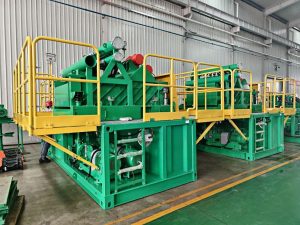
GN 9 Sets Drilling Mud Vacuum Degassers for Europe Client

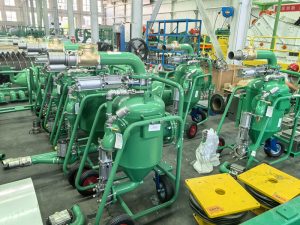
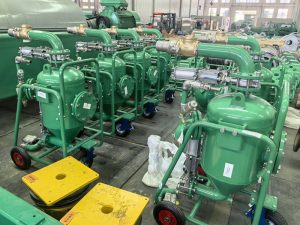
GN Solid Control has successfully delivered nine drilling fluid vacuum degassers to a European client, marking another significant step in its expansion within the high-end international oil and gas equipment market. This batch shipment underscores the growing recognition of Chinese-made solid control equipment for its reliability, technical performance, and strict compliance with international safety standards. The core of this achievement lies in the operational principles and engineered capabilities of the vacuum degasser itself—a critical device for ensuring drilling safety and efficiency.

A vacuum degasser is an essential component of the drilling mud solid control system. Its primary function is to remove hazardous gases—such as hydrogen sulfide (H₂S), methane (CH₄), and carbon dioxide (CO₂)—that become entrained in the drilling fluid during circulation. These gases pose severe risks, including potential well blowouts, fires, explosions, and toxic exposure to personnel. Furthermore, trapped gases can alter the rheological properties of the drilling mud, reducing its density and hydraulic efficiency, which directly impacts drilling progress and cost. The GNZYQ series vacuum degasser from GN addresses these challenges through a precisely engineered vacuum separation process.

The equipment operates by creating a negative pressure environment inside a sealed tank. A vacuum pump extracts air from the tank, lowering the internal pressure. Drilling fluid is then drawn into the tank through a self-priming inlet, eliminating the need for an additional feed pump. Under the vacuum, the fluid spreads and tumbles over internal baffle plates or trays. This dramatic increase in surface area and fluid turbulence causes the entrained gases to break out of the liquid phase. The liberated gases are extracted by the vacuum pump and passed through a mist eliminator or gas/water separator, which removes any carried-over liquid droplets. The cleaned gases are then safely vented to a designated, remote location, while the degassed drilling fluid is discharged back into the active mud system for further processing.

Performance and reliability are built into the design. The internal baffle system is optimized to maximize gas-liberation efficiency even under high flow rate conditions, ensuring consistent performance. Key components in contact with the aggressive drilling fluid are constructed from corrosion-resistant alloys to enhance service life and minimize maintenance. A critical feature of this recent European delivery is that all nine units are certified according to the ATEX directive, the European Union’s mandatory standard for equipment operating in potentially explosive atmospheres. This certification involves rigorous testing of the entire assembly—including the degassing tank, vacuum pump, explosion-proof motor, and control cabinet—for factors such as spark prevention, temperature classification, and sealing integrity. ATEX compliance is non-negotiable for European oilfield operations and demonstrates the product’s suitability for the most stringent safety environments.

Beyond the core degassing function, the equipment is designed for practical integration and ease of use. Its compact and modular structure facilitates installation on skids or within larger solids control systems. The unit can also be configured to function simultaneously as a powerful mud agitator, providing both degassing and homogenization in a single footprint. Operational stability is ensured through straightforward installation protocols and clear monitoring procedures. Guidelines mandate proper submersion of inlet and outlet lines, correct motor rotation verification, and system priming before startup. During operation, maintaining an optimal vacuum level—typically between -0.06 to -0.08 MPa—via an adjustable relief valve is crucial for peak efficiency. Regular weekly test runs are recommended to maintain component readiness and prevent seal degradation.

The successful export of these nine units is not an isolated event but part of GN Solid Control‘s sustained strategy to serve the European market with high-quality, compliant equipment. Over the past decade, the company has progressed from supplying individual components like shale shakers and centrifugal pumps to delivering complete, high-horsepower solids control systems and drilling waste management packages for European clients. This evolution from a component supplier to a systems integrator reflects deep technical accumulation and an understanding of complex project requirements. Supporting this hardware export is a robust service framework, including detailed multilingual documentation, remote technical support, and readily available spare parts, ensuring minimal operational downtime for the end-user.

In conclusion, the delivery of these nine vacuum degassers exemplifies how technical merit, rigorous quality control, and adherence to international standards converge to create a globally competitive product. By focusing on the fundamental working principle—efficient gas removal via controlled vacuum and mechanical separation—and backing it with robust construction and critical safety certifications like ATEX, Guaneng Solid Control provides a reliable solution for a fundamental drilling safety challenge. This transaction reinforces the company’s position as a credible and capable partner in the international oilfield equipment sector, contributing to safer and more efficient drilling operations worldwid

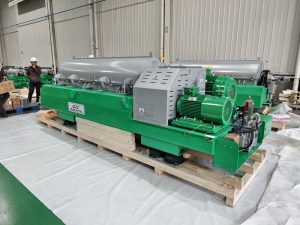
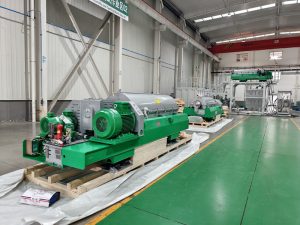
GN Sludge Dewatering Centrifuge Package Shipped to Overseas Environmental Company

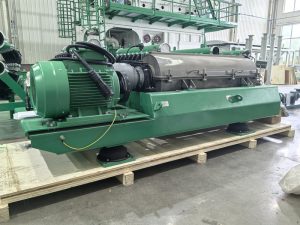
Hebei GN Separation & Conveying Equipment Co., Ltd., a leading Chinese manufacturer of solid-liquid separation equipment, has recently shipped a comprehensive sludge dewatering centrifuge package to an international environmental services company. This delivery underscores Guaneng’s growing capability in providing integrated, high-performance solutions for the global environmental treatment market.

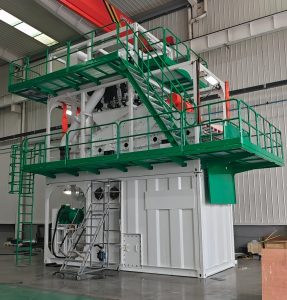
The core of this delivery is a fully modular and automated sludge dewatering system, engineered for efficiency, reliability, and ease of operation. The system is designed around a two-stage “screening + centrifugation” process, a configuration proven effective in demanding applications such as municipal wastewater treatment and industrial sludge handling.

The process begins with a robust pre-treatment stage. A coarse screening module (GNLMP-1536) removes large solids and debris, protecting downstream equipment from clogging and abrasion. This is followed by a fine double-deck screening module (GNZS596K) that captures finer suspended particles. A dedicated desander module (GNZJ594J-8N) then removes sand and other heavy grit, significantly reducing the abrasive content of the sludge before it enters the core separation unit.

The heart of the system is the GNLW553D-VFD decanter centrifuge. This horizontal screw centrifuge features Variable Frequency Drive (VFD) technology, allowing for precise control of the bowl speed and differential speed. This adaptability enables the centrifuge to maintain optimal separation efficiency despite fluctuations in feed sludge concentration and flow rate. The optimized drum and scroll design ensures a high separation factor, large processing capacity, and low energy consumption, producing a consistently dry cake.

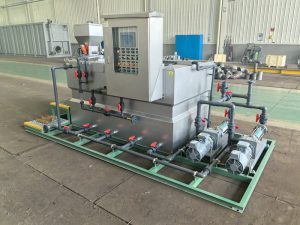
To maximize dewatering performance, the system is integrated with a 20-foot chemical dosing skid. This self-contained unit automatically prepares and injects flocculants (like PAM or PAC) into the sludge stream. The precise dosing enhances solid agglomeration, leading to improved capture rates and a drier final cake, while minimizing chemical usage and potential secondary pollution.

A key advantage of this packaged solution is its focus on total lifecycle cost and operational sustainability. The pre-screening stages drastically extend the service life of the centrifuge by shielding it from damaging solids, reducing maintenance downtime and spare parts costs. The entire system is engineered for energy efficiency, reportedly achieving 20%-30% lower energy consumption per unit of processed sludge compared to conventional setups. Furthermore, the compact, skid-mounted design facilitates easier transportation and faster on-site installation, which is a critical factor for international projects.

GN’s approach goes beyond simply supplying equipment. The company offers customized engineering support, tailoring the system components—from centrifuge model and materials of construction to control system parameters—to match the specific characteristics of the client’s sludge, whether it’s oily waste, municipal biosolids, or mining tailings. The package represents a true “turnkey” solution, where all components, including the dosing unit and feed pumps, are designed to work in seamless harmony, eliminating compatibility issues often encountered with multi-vendor procurement.

This successful international shipment highlights GN’s transition from a specialized equipment manufacturer to a provider of complete environmental process solutions. By combining robust, application-proven technology with integrated system design and a client-focused service model, Guaneng is positioning its sludge dewatering systems as a competitive and reliable choice for global environmental challenges, contributing to more efficient and sustainable waste management practices worldwide.

GN Solids Control Invite you to Beijing 2026 CIPPE Oil Show

We are excited to announce that GN Solids Control will be participating in the 26th China International

Petroleum & Petrochemical Technology and Equipment Exhibition (CIPPE 2026), the premier oil and gas industry event in Asia. This is a fantastic opportunity to explore the latest innovations in solids control, waste management, and drilling fluids equipment.

Show Name: The 26th China International Petroleum & Petrochemical Technology and Equipment

Exhibition Dates: March 26–28, 2026 Venue: China International

Exhibition Center (New Venue) – Shunyi Hall, Beijing, China

GN Booth No.: E2168

At our booth, you will discover our latest advancements in shale shakers, decanter centrifuges, mud cleaners, centrifugal pumps, and complete LMP systems. Our team of experts will be on hand to discuss your project requirements and demonstrate how GN’s solutions can improve efficiency and reduce costs in your drilling operations. Why visit GN Solids Control at CIPPE? Meet our engineering and sales team face-to-face. Learn about our customized solutions for onshore and offshore drilling. See live demonstrations of our equipment. Discuss your specific challenges and get expert advice.

We cordially invite all industry professionals, partners, and friends to visit us at Booth E2168. Come and experience the quality and reliability that GN Solids Control brings to the global market.

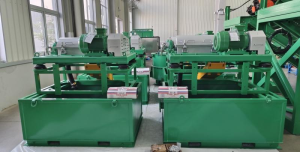
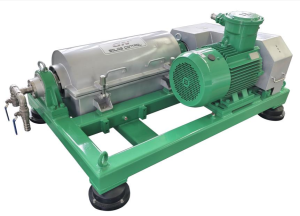
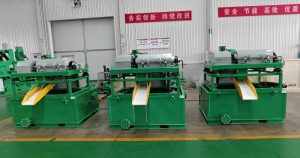
3 Package Hydraulic Drive Mini Centrifuge Unit for Diamond Core Drilling

The effective management of drilling mud is a critical technical requirement in exploration core drilling, a fundamental activity within geological surveying and mineral resource exploration. During drilling operations, the bit cuts through rock formations, generating a continuous stream of cuttings and solid particles. If these solids are not efficiently removed from the circulating mud system, they degrade mud properties, accelerate wear on drilling tools, reduce the rate of penetration, compromise wellbore stability, and can lead to severe operational issues such as stuck pipe or hole collapse. Furthermore, the environmental imperative for sustainable exploration necessitates the proper treatment of waste mud to prevent soil and water contamination. Consequently, establishing an efficient, reliable, and environmentally sound solid-liquid separation system is indispensable for modern exploration projects. In this context, fully hydraulically driven decanter centrifuges, with their high separation efficiency, substantial processing capacity, compact design, operational adaptability, and environmental benefits, are increasingly becoming the standard equipment for mud treatment in exploration core drilling.

A fully hydraulically driven decanter centrifuge is a core solids control device engineered for demanding drilling environments. Its power system is entirely driven by hydraulics, offering distinct advantages over traditional electric motor drives, including high starting torque, wide speed adjustment range, strong resistance to shock loads, smooth operation, and superior adaptability to complex working conditions. Exploration coring operations are characterized by variable borehole depths, complex lithology, and frequent fluctuations in mud density. Traditional equipment often suffers from overload shutdowns or drastic drops in separation efficiency under sudden load changes. In contrast, a hydraulic system allows for precise adjustment of the differential speed between the rotating bowl and the internal scroll conveyor. This enables adaptive control to handle varying solid content, particle size distribution, and mud viscosity, ensuring stable separation performance even with highly variable feed conditions. For instance, models like the GNLW223D series mini decanter centrifuges are specifically optimized for the exploration coring industry. Their hydraulic drive systems facilitate low-speed, high-torque operation, effectively reducing mechanical wear and extending service life. Simultaneously, precise differential speed control allows for the efficient removal of fine solids down to 5 microns, significantly improving mud cleanliness and reuse rates.

In practical applications, fully hydraulic centrifuges are typically integrated into a four-stage solids control system alongside shale shakers, desanders, and desilters. This setup forms a complete processing chain from coarse to fine separation. The shale shaker acts as the primary stage, removing large cuttings. Desanders and desilters handle medium-coarse and fine particles, respectively. The fully hydraulic centrifuge serves as the fourth and most critical stage for fine separation. It is responsible for removing ultra-fine particles—particularly barite, clay particles, and fine rock flour—thereby restoring key mud properties like density, viscosity, and fluid loss to optimal ranges. This ensures the continuity and safety of the drilling process. Leading domestic solids control equipment manufacturers have developed specialized fully hydraulic centrifuges for this sector. Models like the GNLW223D are noted for their compact structure and high processing capacity, making them a mainstream choice in the global core drilling market. A significant portion of their annual production is dedicated to exploration projects, with clients across regions like North Africa, Southeast Asia, and South America. These units often feature a skid-mounted, integrated design for easy transportation and rapid deployment, which is particularly advantageous in remote or difficult terrains such as mountains, plateaus, or forests common to exploration sites, enabling “plug-and-play” operation and significantly boosting overall project efficiency.

It is important to note that the mud systems used in exploration coring differ significantly from those in oil and gas drilling. Exploration drilling predominantly uses water-based or low-solids muds. While the overall solid content may be lower, the particles tend to be finer and more easily suspended, placing higher demands on separation precision. Furthermore, exploration coring typically involves smaller diameter holes and significant depths (commonly 400–1500 meters, with some equipment capable of exceeding 2000 meters). These are long-duration, high-cost-per-meter operations where maximizing mud recycling is paramount. The high separation efficiency of hydraulic centrifuges can increase mud recovery rates to over 85%, drastically reducing the need for fresh mud makeup and the volume of waste for disposal, thereby lowering material costs and environmental handling fees. Key components such as the bowl, scroll conveyor, and feed pipe are manufactured from high-strength wear-resistant alloy steel, often with ceramic linings or hard metal welding, to withstand long-term abrasion from high-specific-gravity solids (like barite) and abrasive cuttings, ensuring long-term reliability even under harsh conditions. Some advanced models incorporate innovative drive technologies that dynamically adjust power output based on actual load, achieving energy savings of over 30%, aligning with the industry’s trend toward low-carbon, green exploration.

In terms of system integration, fully hydraulic centrifuges are often combined with automated chemical dosing systems, mud property monitors, and remote control systems to form an intelligent solids control platform. Operators can monitor real-time centrifuge parameters—such as bowl speed, differential speed, torque, temperature, and vibration—via a control panel. The system can automatically adjust operating modes based on mud analysis data, enabling continuous, near-unattended operation. This move toward intelligence reduces dependency on highly experienced personnel and enhances overall system reliability and safety. For example, delivery contracts for fully hydraulic centrifuges to clients in North Africa have included integrated automatic control systems with remote data transmission modules, allowing for cloud-based monitoring of equipment status and predictive maintenance, greatly improving operational efficiency for remote projects.

From a market perspective, the adoption rate of fully hydraulic centrifuges in exploration coring is rising rapidly. Traditionally, this sector relied on manual settling pits or simple screening, methods that were inefficient and environmentally problematic. With increasing national emphasis on mineral resource exploration and the implementation of policies and standards promoting green mining and environmental protection in exploration, the demand for efficient, eco-friendly solids control equipment has become mandatory. Domestic manufacturers now offer comprehensive product lines covering fully hydraulic centrifuges from micro (9-inch bowl) to large (16-inch and above) sizes, with processing capacities ranging from 1–5 cubic meters per hour to over 15 cubic meters per hour. This range meets diverse needs from shallow core sampling to deep mineral body exploration. These centrifuges have become standard equipment in areas requiring high core sample accuracy, such as geological research projects, metal ore exploration (e.g., for gold, copper, lithium), and hydrogeological surveys.

Moreover, advancements in exploration drill rig technology themselves facilitate the application of fully hydraulic centrifuges. Modern exploration rigs are predominantly fully hydraulic, crawler-mounted machines equipped with wireline core barrel systems (BQ/NQ/HQ/PQ series). They are capable of multi-angle coring and deep-hole operations, with highly integrated power and mud circulation systems. This integration provides a natural hydraulic power interface for ancillary equipment like centrifuges. Rigs produced by various manufacturers feature built-in mud pumps and power take-off units that can directly supply hydraulic power to a centrifuge, enabling seamless “rig-centrifuge” synergy. This eliminates the complexity of arranging external power sources or independent generators, significantly enhancing mobility and adaptability for field operations.

In summary, the application of fully hydraulically driven decanter centrifuges in mud treatment for exploration coring drilling has evolved from an optional enhancement to an essential core component. Their high-precision solid-liquid separation capability, excellent environmental adaptability, modular design, energy-efficient operation, and potential for intelligent control make them key technological assets for improving exploration efficiency, ensuring operational safety, reducing costs, and achieving green exploration objectives. With the ongoing push for new breakthroughs in mineral prospecting and the driving force of “dual-carbon” goals prompting greener practices in mining, the penetration rate of fully hydraulic centrifuges in the exploration sector is projected to exceed 70% within the next three years. The deployment of three sets of such centrifuges for a project represents a strategic investment in systematic, efficient, and responsible drilling operations, underpinned by robust technical principles, industry standards, environmental regulations, and proven field performance.

One batch of Mining Vibrating Screens Used for Iron Ore Separation in Ports

One batch of Mining Vibrating Screens refers to a coordinated system of vibration-based equipment designed to process material within a defined operational cycle. This system integrates specialized machines for feeding, screening, and dewatering to form a continuous, efficient workflow. The primary function is to use controlled mechanical vibration to separate, convey, and treat bulk materials, thereby enhancing throughput and operational reliability in mining and aggregate processing.

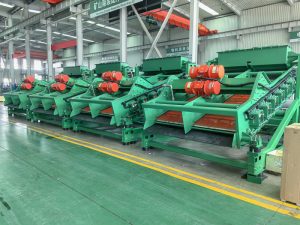
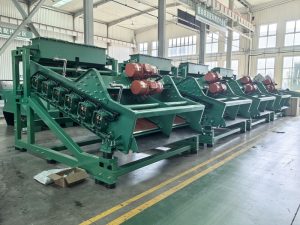
In such a batch, specific equipment is selected and configured to perform sequential tasks. For instance, a vibrating feeder supplies raw material at a controlled rate to the primary processing stage. Following this, screening equipment classifies the material by particle size. A key technological advancement in this area is the use of high-frequency fine screens to replace traditional trommel screens for scalping applications. The single-deck high-frequency fine screen model GNFG1232 exemplifies this shift. It is engineered for efficient removal of oversize debris and is equipped with an under-screen collection chute to gather the screened fines, ensuring a clean separation and minimizing material loss. This design is particularly effective for handling sticky or damp materials where traditional rotary screens might experience blinding or reduced efficiency.

After the initial screening, material often requires further processing to reduce moisture content. This is where dewatering screens are critical. In a large-scale setup, a linear motion screen like the model GNLSZ3061 is employed for dewatering. This large linear screen uses a dual-vibrator motor configuration to generate a linear vibrating force. This motion propels the material across the screen surface while allowing water to drain through the screen panels. The GNLSZ3061 is designed for high-capacity dewatering of sand, tailings, or other slurry-type materials, producing a drier product for subsequent handling or disposal.

The integration of these devices into a single batch relies on precise engineering. Each machine’s operational parameters—such as vibration frequency, amplitude, and screen angle—must be harmonized based on the processed material’s characteristics, including density, particle size distribution, and moisture level. For example, the high-frequency, low-amplitude action of the GNFG1232 fine screen is optimal for precise separation of fine particles, while the robust, long-stroke linear motion of the GNLSZ3061 is suited for conveying and draining heavier, wetter loads. The system’s efficiency depends on this parametric matching to ensure smooth material transfer between stages without bottlenecks or overflow.

Structurally, these vibrating machines are built for durability in harsh environments. Frames are typically constructed from heavy-duty steel to withstand constant dynamic loads. Critical wear parts, such as screen panels, use advanced materials. Polyurethane or rubber screen surfaces are common for their abrasion resistance and ability to dampen noise. The GNFG1232’s fine screen deck and the GNLSZ3061’s dewatering panels would utilize such materials to extend service life and maintain screening accuracy. Furthermore, the drive system is fundamental. Most modern units employ externally mounted vibration motors with adjustable eccentric weights. This allows for fine-tuning the vibratory action to suit different materials without major mechanical changes.

The control and support systems are integral to a functional batch. Vibration isolation mounts are installed to prevent the transmission of oscillatory forces to the plant’s foundational structure, protecting infrastructure and reducing noise. Increasingly, these systems incorporate programmable logic controllers for automation. Operators can monitor performance metrics like motor current, vibration amplitude, and feed rate, making adjustments remotely to optimize the batch process for changing feed conditions or desired product specifications.

The transition from traditional methods, like trommel screens, to advanced vibrating screens such as the GNFG1232 offers measurable benefits. It typically results in higher screening efficiency, greater throughput per unit area, reduced maintenance due to fewer moving parts, and improved separation accuracy. Similarly, using a dedicated, high-capacity linear dewatering screen like the GNLSZ3061 ensures more effective moisture removal compared to simpler draining methods, yielding a product that is easier and cheaper to transport.

In conclusion, one batch of mining vibrating equipment represents a systematic approach to materials processing. By integrating purpose-built machines like the high-frequency fine screen GNFG1232 for precise scalping and the large linear screen GNLSZ3061 for efficient dewatering, operations can achieve a continuous, automated, and highly effective processing cycle. The success of this batch hinges on correct equipment selection, parametric synchronization, robust construction, and intelligent control, all aimed at maximizing productivity and reliability in mineral and aggregate handling.

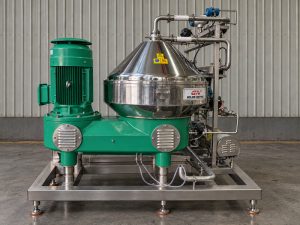
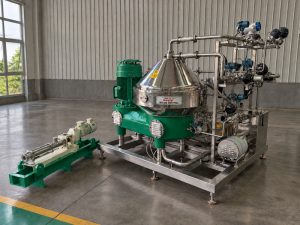
The disc separator is a core component within the GN Solids Control oil sludge treatment system, responsible for the critical task of three-phase separation. Operating on the principle of high-speed centrifugal force, this vertical centrifuge efficiently divides incoming sludge into its constituent parts: recoverable oil, water, and solid residues. Its function is not merely separation but the precise, continuous, and automated purification necessary for modern industrial waste recovery and environmental compliance.

Structurally, the machine consists of a vertical bowl rotating at high speed on a spindle, driven by an electric motor. Inside this bowl, a stack of conical metal discs is precisely spaced, creating numerous narrow channels. The entire assembly rotates at several thousand revolutions per minute, generating a centrifugal force often exceeding 10,000 times gravity. This immense force is the primary agent of separation. When oil sludge is fed into the center of the rotating assembly, it is distributed into the gaps between the discs. Here, the different densities of the components cause them to stratify under centrifugal force. The heaviest solid particles are flung outward, sliding down the surfaces of the discs to collect in a sediment-holding space at the bowl’s periphery. The lighter water phase forms a middle layer, while the lightest oil phase forms the innermost layer. Specially designed components called centripetal pumps—one for the oil and one for the water—then independently and continuously extract these two liquid phases from the rotating system, leaving the solids behind for periodic discharge.

This separation process addresses a key challenge in oil sludge treatment: the presence of stable emulsions and fine suspended solids. Traditional gravity settling or filtration often fails to break these down effectively. The high gravitational force generated by the disc separator disrupts these emulsions, forcing tiny oil droplets and water to coalesce into distinct, separable phases. Similarly, fine solid particles that would pass through a filter are compelled to settle out. The result is a significantly higher purity of recovered oil, water with a very low residual oil content, and dewatered solids. In practical terms, this translates to oil recovery rates often above 90%, discharged water containing less than 500 mg/L of oil, and solid residue with a moisture content below 20%, meeting stringent standards for reuse or disposal.

Within the Crown Power system, the disc separator typically functions as the final, or polishing, stage of separation. It is designed to handle feed material with a low solid content, usually under 3%. Therefore, it is commonly preceded by primary treatment equipment like shale shakers, decanting centrifuges, or settling tanks. These upstream units remove the bulk of the solids, conditioning the sludge into a suitable state for the disc separator’s precise operation. This staged approach maximizes overall system efficiency and protects the sensitive disc stack from clogging or excessive wear. The system is offered in various models with different throughput capacities, allowing for customization based on the volume of sludge to be processed.

Operation and maintenance are streamlined for reliability and minimal manual intervention. A key feature is the automated solids ejection system. The accumulated solids in the bowl’s holding space can be discharged at programmed intervals or based on sensor feedback, without stopping the machine. This ensures continuous processing. The system is often integrated with a Programmable Logic Controller (PLC) for automated control of the entire sequence, including feed pumps, discharge valves, and optional chemical dosing systems. The addition of demulsifiers or flocculants can further enhance separation performance for particularly challenging sludges. Maintenance primarily involves periodic cleaning of the disc stack and inspection of seals and wear parts, facilitated by a design that allows for relatively straightforward disassembly.

The advantages of using a disc separator in this context are multifaceted. Its high separation efficiency directly boosts resource recovery, turning waste into a valuable product. The quality of the separated outputs ensures compliance with environmental regulations regarding discharge or disposal. The continuous, automated operation reduces labor costs and increases overall system uptime. Furthermore, the enclosed, clean design of the equipment contributes to a safer and more environmentally sound worksite, with no exposure to fumes or spillage during normal operation.

In summary, the disc separator’s role in the GN oil sludge system is indispensable for achieving high-precision three-phase separation. It transforms a complex, often problematic waste stream into distinct, manageable, and valuable fractions. By leveraging extreme centrifugal force in a carefully engineered package, it delivers the performance required for both economic resource recovery and responsible environmental stewardship in industrial operations.

GN Vibrating Screen for Domestic Iron Mine

The application of GN mining vibrating screens in domestic iron ore projects represents a significant advancement in processing technology, addressing long-standing industry challenges related to efficiency, precision, and operational cost. This analysis focuses on the specific deployment of two key models: the GNLSP3073 Large Linear Vibrating Screen (1 unit) and the GND5Z1014 Stack Vibrating Screen (4 units), within a contemporary iron ore processing operation.

The GNLSP3073 Large Linear Vibrating Screen is engineered for high-capacity, coarse to medium separation duties, such as scalping run-of-mine ore or sizing crushed material before beneficiation. Its design is predicated on a dual-motor, self-synchronizing drive system that generates a forceful, linear motion. This motion ensures consistent material travel across the full width of the screen deck, promoting high throughput and effective stratification of particles. The robust construction, utilizing high-strength alloy steel plates and a non-welded sidewall design, is critical for withstanding the high-impact loads and continuous vibration inherent in iron ore processing. This structural integrity directly translates to extended service life and reduced maintenance downtime. For iron ore applications, this screen is typically employed after primary or secondary crushing to efficiently remove fine material or to produce a controlled feed size for downstream grinding circuits, thereby optimizing overall plant capacity.

In contrast, the GND5Z1014 Stack Vibrating Screen, deployed here as a battery of four units, is designed for precision classification and high-efficiency dewatering of finer iron ore fractions. Its defining feature is the multi-layer, vertically stacked deck configuration. This design allows a single machine footprint to accommodate up to five independent screening surfaces, each with a progressively finer aperture. Material is fed to the top deck, with each layer performing a distinct separation. This setup is exceptionally effective for the complex grading of iron ore, particularly for particles below 10mm. It enables a single feed stream to be accurately separated into multiple, tightly defined product fractions—such as -5mm, -2mm, -0.5mm, and -0.1mm—in one pass. This precise classification is fundamental to modern beneficiation processes like magnetic separation or flotation, where consistent feed particle size directly impacts mineral liberation and recovery rates. The use of flexible polyurethane screen panels on these decks is a key performance differentiator. Their high open area, combined with inherent anti-blinding and wear-resistant properties, maintains screening accuracy over long periods when processing damp, sticky, or abrasive fine iron ores, a common challenge that severely degrades the performance of traditional wire mesh screens.

The operational synergy between the large linear screen and the stack screens creates a highly efficient flowsheet. The GNLSP3073 acts as a primary workhorse, handling the bulk of the volumetric load and removing a significant portion of waste or oversize material. The prepared feed is then directed to the battery of GND5Z1014 stack screens for the critical, high-precision grading stage. This staged approach maximizes the strengths of each technology: high-volume processing followed by multi-product precision separation. The result is a system that delivers superior overall screening efficiency, often exceeding 90%, compared to legacy setups using multiple single- or double-deck screens in series. This high efficiency directly boosts the recovery of valuable iron minerals and lowers the tailings grade.

Beyond separation performance, these GN models incorporate features that address broader operational and environmental mandates in the mining sector. The stack screens’ compact footprint is a major advantage in brownfield plant upgrades or space-constrained sites, as they provide the capacity of several conventional screens in one unit. Both screen types are equipped with high-performance rubber isolation springs that effectively dampen transmitted vibrations, reducing structural loads on supporting infrastructure and minimizing operational noise. Furthermore, the stack screens are highly effective for dewatering applications. When configured for this duty, their multiple decks and controlled vibration parameters facilitate efficient drainage of water from fine iron ore concentrates or tailings slurries. This capability supports the industry-wide push toward tailings dry stacking, reducing water consumption, minimizing environmental footprint, and improving dam safety.

The selection of these specific models—one large linear and four stack screens—indicates a project designed for substantial throughput with an emphasis on sophisticated, multi-product classification. This configuration suggests the processing of a complex ore body where maximizing yield and product quality from various size fractions is economically critical. The proven reliability of GN’s drive systems, structural design, and wear components ensures high system availability, which is paramount for continuous mineral processing operations where unplanned stoppages incur significant production losses.

In conclusion, the integration of GN’s GNLSP3073 Linear Vibrating Screen and GND5Z1014 Stack Vibrating Screens provides a technically robust solution for modern iron ore projects. This equipment combination directly tackles core industry needs: achieving high throughput and precise particle size control, reducing plant footprint and energy consumption, enhancing equipment longevity, and facilitating environmentally responsible water management. The successful deployment of these systems underscores a shift toward more efficient, reliable, and intelligent screening technologies as foundational elements for improving the economics and sustainability of iron ore beneficiation in the domestic market.

GN Decanter Centrifuge and Cuttings Dryer for Africa Drilling Company

GN Decanter Centrifuge and Cuttings Dryer for Africa Drilling Company.The supplied system configuration consists of 2 units of the GNLW363CD-VFD decanter centrifuge and 1 unit of the GNCD930G vertical cuttings dryer, complete with necessary screw conveyors, a centrifuge feed pump, and a dryer wash pump. This integrated system is engineered to provide an efficient, reliable, and compliant solution for processing oil-based drill cuttings, directly addressing key operational challenges in the African drilling sector.


The GNCD930G vertical cuttings dryer serves as the primary stage for solids dewatering. Designed specifically for oil-based and synthetic-based drilling fluids, this unit applies high centrifugal force to separate liquid from drill solids. Its key function is to reduce the oil-on-cuttings (OOC) content to a level typically below 5%, which meets or exceeds stringent environmental discharge standards prevalent in many African nations. The dryer incorporates features such as an automatic high-pressure air knife system to prevent screen blinding and hardened alloy components in critical wear areas, ensuring sustained performance and reduced maintenance frequency in demanding field conditions. Its processing capacity is suitable for handling cuttings from active drilling operations.

The GNLW363CD-VFD decanter centrifuge functions as the secondary, polishing stage in the treatment process. It is designed for fine solids separation and maximum recovery of base fluids. The liquid fraction recovered from the dryer is fed to this centrifuge. Its variable frequency drive (VFD) allows for precise control of the bowl and scroll speeds, enabling operators to optimize separation parameters for different mud weights and solid profiles. Constructed with corrosion-resistant materials and equipped with robust bearings and wear-protected components, this centrifuge is built to handle the operational demands and potential fluid corrosiveness found in African drilling environments. The primary output is high-quality recovered base fluid, ready for reinjection into the active mud system, and dry solids with minimal residual liquid.

The supporting equipment is integral to creating a continuous, closed-loop system. Screw conveyors facilitate the automated transfer of wet cuttings from collection points to the dryer’s feed hopper, ensuring consistent material flow. The dedicated centrifugal pump supplies feed slurry to the decanter centrifuge at a controlled rate, while the high-pressure wash pump is used for periodic cleaning of the dryer screens to maintain optimal throughput. This auxiliary equipment is selected and sized to match the processing capacity of the main units, ensuring seamless integration.

The combined operation of this system delivers significant tangible benefits for an African drilling company. The foremost advantage is regulatory compliance. By consistently producing dry solids with low OOC, the system helps operators adhere to local and international environmental regulations regarding cuttings disposal, mitigating the risk of non-compliance penalties and supporting responsible operations. Secondly, the system drives substantial cost savings. The high efficiency of the decanter centrifuge in recovering valuable base fluids directly reduces the need for fresh fluid purchases and lowers the volume of waste requiring costly disposal. This recovery translates into a lower net drilling fluid cost per well. Thirdly, the system enhances operational efficiency. The automated, continuous process minimizes manual handling of cuttings, reduces downtime associated with waste management, and allows for faster drilling progress. The modular and robust design of GN equipment is particularly advantageous for the African context, where sites may be remote, logistics challenging, and environmental conditions harsh. The system’s reliability minimizes unplanned maintenance and ensures consistent waste processing capability.

In summary, the specified configuration of two GNLW363CD-VFD centrifuges, one GNCD930G dryer, and associated conveying and pumping equipment forms a complete and effective cuttings processing solution. Its design prioritizes high separation performance, operational reliability, and ease of integration into existing drilling waste management workflows. For an African drilling company, deploying this system represents a strategic investment in achieving environmental objectives, realizing considerable cost reductions through fluid recovery, and improving overall drilling efficiency through streamlined waste handling.