Iron ore processing has always been a critical part of the global mining industry, and in recent years, the demand for finer and more efficient separation technologies has grown considerably. As high-grade ore reserves continue to decline, the need to process low-grade, finely disseminated ore bodies has pushed operators to seek more precise screening solutions. One technology that has gained significant traction in this space is the high-frequency vibrating fine screen, particularly the co-frequency vibrating fine screen developed by GN Solids Control. This equipment is specifically engineered to handle the challenges of fine iron ore classification, where traditional screening methods often fall short.
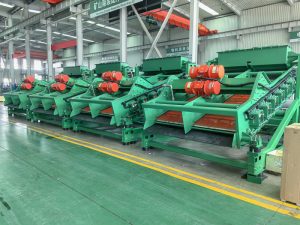
The core function of a high-frequency vibrating fine screen is to separate particles at a very fine cut point, typically below 0.5 millimeters. Unlike conventional screens that rely on larger amplitudes and lower frequencies, these units operate with small amplitudes and high vibration frequencies. This design allows for better stratification of the feed material, which in turn improves the efficiency of the separation process. In iron ore applications, this translates directly into higher-grade concentrate and reduced losses of valuable iron units to the tailings stream.
One of the most significant technical advantages of the GN co-frequency vibrating fine screen is its use of a dual-motor self-synchronizing drive system. The two motors operate in reverse directions, generating a linear motion that moves the material evenly across the screen surface. This approach eliminates the need for bulky mechanical exciters, which are common failure points in other vibrating screens. The result is a more reliable machine with lower maintenance requirements, a key consideration for operations running continuous shifts in abrasive environments.
The screen deck configuration also plays a major role in the performance of this equipment. GN offers multi-deck arrangements, ranging from two to five layers, depending on the specific requirements of the application. This design allows for a much larger effective screening area within a compact footprint. For iron ore plants where floor space is often limited, this is a practical advantage. The multi-layer design also enables the machine to process higher tonnages per unit area, which directly improves the economics of the operation.
Another critical aspect is the choice of screen media. GN uses flexible polyurethane panels for the screening surface. Polyurethane is well known for its wear resistance and its ability to reduce blinding, which occurs when fine particles clog the openings in the screen mesh. This is especially important in iron ore processing, where the material can be sticky or contain a high percentage of near-size particles that tend to wedge into the apertures. By reducing blinding, the screen maintains consistent throughput and separation efficiency over longer periods, minimizing downtime for cleaning and panel replacement.
From a process perspective, the use of a high-frequency fine screen in iron ore circuits has been shown to improve the quality of the final concentrate. When installed ahead of the flotation or magnetic separation stages, the screen ensures that the feed material is properly classified, which enhances the performance of downstream equipment. In many installations, the use of such screens has resulted in a measurable increase in iron recovery and a reduction in silica content in the final product. These improvements have a direct impact on the commercial value of the concentrate and the overall profitability of the mine.
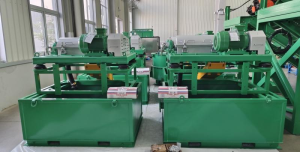
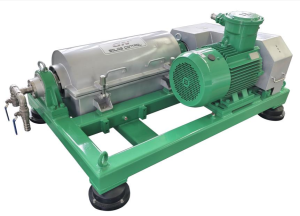
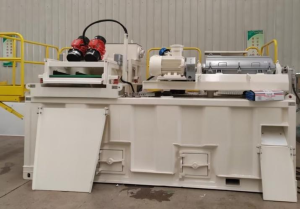
In addition to the vibrating screen itself, GN provides complementary equipment such as decanter centrifuges for dewatering and solid vacuum pumps for material transport. This integrated approach means that a single supplier can provide a complete solution for fine particle separation, from classification to dewatering. For project managers and plant engineers, this reduces the complexity of coordinating multiple vendors and ensures that the different pieces of equipment are compatible with each other.
The operational benefits of the GN co-frequency vibrating fine screen are supported by real-world data from iron ore projects. In several installations, the use of this equipment has led to a significant improvement in screening efficiency compared to older nylon or conventional wire mesh screens. The ability to achieve a finer cut point without sacrificing throughput has allowed plants to increase their overall production while maintaining product quality. Furthermore, the extended lifespan of the polyurethane panels, which can last up to 7,000 hours in abrasive service, reduces the frequency of maintenance interventions and lowers the total cost of ownership。
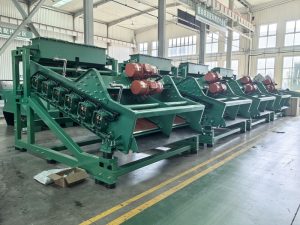
Looking at the broader industry context, the development of high-frequency screening technology has been driven by the need to process more complex ore bodies. As mining operations move toward lower-grade deposits, the economic viability of a project often depends on the ability to recover value from fine and ultrafine particles. The GN co-frequency vibrating fine screen addresses this challenge head-on by providing a robust, efficient, and cost-effective solution for fine iron ore classification. Its design principles, which prioritize reliability, ease of maintenance, and high separation accuracy, make it a suitable choice for both greenfield projects and existing plants looking to upgrade their classification circuits.
In summary, the GN co-frequency vibrating fine screen represents a practical and well-engineered solution for fine iron ore screening. Its dual-motor linear motion drive, multi-deck configuration, and durable polyurethane screen media combine to deliver high screening efficiency, low operating costs, and consistent performance under demanding conditions. For mining companies focused on improving recovery rates and product quality, this technology offers a clear path to achieving those objectives without the need for extensive modifications to existing plant infrastructure. As the industry continues to evolve, equipment of this nature will play an increasingly important role in ensuring that iron ore processing remains both economically and environmentally sustainable.