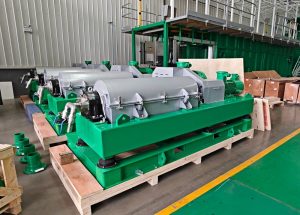
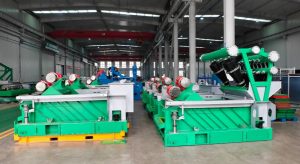
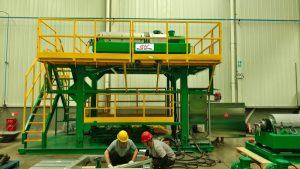
Multiple sets of drilling fluid solids control centrifuge systems have been successfully exported to overseas drilling companies, marking a significant expansion in the global reach of Chinese-manufactured oilfield equipment. This delivery includes specialized configurations tailored to diverse drilling operations, demonstrating both technical versatility and market responsiveness. Specifically, the shipment comprises two sets of diesel-engine-driven hydraulic centrifuges, model GNLW223D-FHD, designated for a mineral exploration and core drilling project; one set of a 363D-VFD variable frequency drive centrifuge for a conventional oil drilling project; and one integrated system pairing a GNZS593 shale shaker with a GNLW363D centrifuge for a horizontal directional drilling (HDD) or “trenchless” mud processing application.
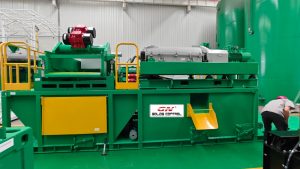
The export of these systems underscores a growing international demand for efficient, reliable, and cost-effective solids control solutions. In drilling operations, maintaining optimal drilling fluid properties is critical for safety, efficiency, and cost management. Solids control equipment, particularly centrifuges, plays a vital role by removing fine, abrasive particles from the drilling fluid. This process preserves the fluid’s desired density and viscosity, reduces wear on drilling tools, minimizes the need for fresh fluid and chemical additives, lowers waste disposal volumes, and helps prevent drilling complications such as stuck pipe.
The two GNLW223D-FHD hydraulic centrifuges supplied for the exploration project represent a robust solution for remote or mobile operations. Diesel engine drive provides power independence, making the units suitable for locations without reliable grid electricity. The hydraulic system offers smooth speed control and high torque, enabling effective separation of fine solids from the drilling fluid, which is especially important in core sampling where fluid clarity can impact sample integrity and operational data.
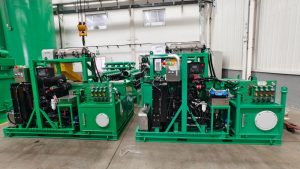
For the oil drilling project, the 363D-VFD centrifuge offers advanced process control. The Variable Frequency Drive allows for precise adjustment of the centrifuge’s bowl and conveyor speeds. Operators can fine-tune these parameters in real-time to match changing downhole conditions, drilling rates, and fluid properties. This optimization maximizes separation efficiency for a given particle size range while managing power consumption, contributing to both performance and operational economy.
The system configured for the non-excavation or HDD project highlights the adaptability of these technologies beyond traditional oil and gas. HDD operations, used for installing pipelines and utilities underground without open trenches, generate significant volumes of slurry that must be processed for reuse or disposal. The GNZS593 high-capacity linear motion shale shaker serves as the primary stage, removing larger cuttings. The discharged fluid then feeds into the GNLW363D centrifuge for secondary, fine-particle separation. This two-stage purification ensures the slurry maintains consistent properties for lubrication and borehole stability, while also reducing environmental footprint through efficient waste minimization.
The successful penetration of these systems into the international market is driven by several key factors. Firstly, Chinese manufacturers have achieved substantial technological parity with established Western brands in terms of separation efficiency, mechanical reliability, and operational features. Critical components, including high-precision bearings, wear-resistant materials, and control systems, now meet stringent international standards. Secondly, these systems offer a compelling cost-to-performance ratio, providing comparable capability at a significantly lower capital investment, which is a decisive factor for many drilling contractors. Thirdly, manufacturers have developed strong capabilities in providing customized, skid-mounted, and modular solutions. This allows for rapid deployment, easier transportation to remote sites, and integration into various rig layouts, whether on land, offshore platforms, or mobile HDD setups. Finally, manufacturers support their exports with comprehensive after-sales services, including technical training, remote monitoring support, and efficient spare parts logistics, building long-term client relationships.
In conclusion, the export of these multiple drilling fluid centrifuge systems—spanning exploration, oil drilling, and trenchless technology applications—reflects a mature and competitive global supply chain. It evidences the capability of manufacturers to deliver targeted, high-performance solids control solutions that meet the specific technical and economic requirements of international drilling companies across different sectors of the industry.