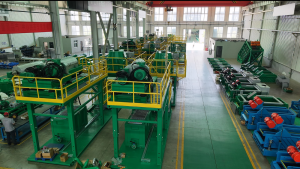
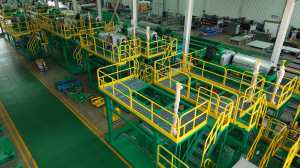
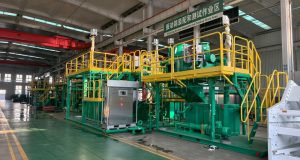
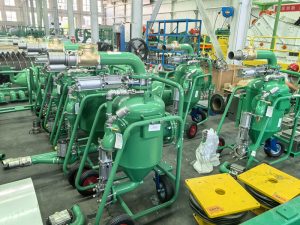
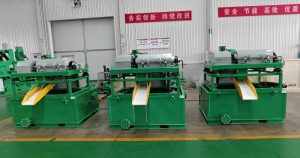
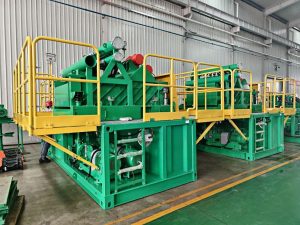
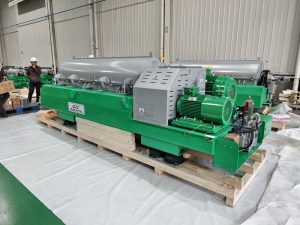
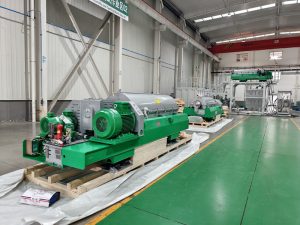
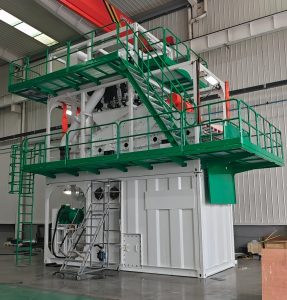
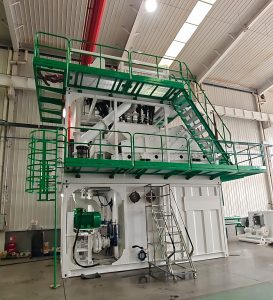
Seaweed processing in Southeast Asia has expanded rapidly over the past decade, driven by growing global demand for sustainable proteins, bioactive compounds, and bio-based materials. The region’s warm coastal waters and established aquaculture infrastructure make it a major supplier of both macroalgae and microalgae. However, the downstream processing of seaweed biomass presents persistent engineering challenges, particularly in the solid-liquid separation stage. GNL 2-phase disc centrifuges have emerged as a practical solution for these separation tasks, and their deployment in Southeast Asian seaweed projects reflects a broader trend toward high-efficiency mechanical separation in marine bioprocessing.
Seaweed slurries differ significantly from conventional fermentation broths or wastewater streams. They typically contain fine cellular particles, often in the micron range, suspended in a liquid phase that carries dissolved polysaccharides and other viscous compounds. These characteristics create two immediate problems: slow gravitational settling and a tendency for the solid phase to foul or clog separation equipment. In many Southeast Asian operations, seaweed is harvested or cultivated in dilute suspension, meaning the initial solid concentration is low. Recovering this dilute biomass efficiently is essential because the cost of dewatering directly affects the economics of downstream drying, extraction, and product formulation.
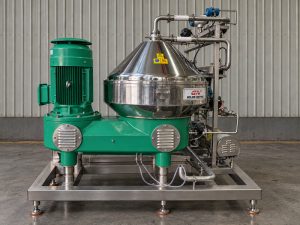
The target of separation in a typical project is straightforward: concentrate the algal cells or fragments into a high-solids stream while producing a clarified liquid that can be discharged or recycled. A 2-phase disc centrifuge is well suited to this task because it separates based on density difference under high centrifugal force, without requiring chemical pretreatment or excessive thermal input.
A disc centrifuge operates by feeding slurry into a rapidly rotating bowl that contains a stack of conical discs. These discs divide the internal volume into narrow channels, reducing the distance a particle must travel before it reaches a settling surface. This design dramatically increases the effective settling area within a compact machine footprint. Under centrifugal acceleration, denser particles—in this case, seaweed cells and cell debris—migrate outward and collect along the disc surfaces, eventually sliding toward the bowl wall. The lighter liquid phase moves inward and exits through a separate outlet.
The 2-phase configuration means the machine produces two streams: a concentrated solids phase and a clarified liquid phase. For seaweed slurries, this is often the preferred arrangement because the goal is biomass recovery rather than simultaneous oil or solvent separation. Solids discharge can be automated, with the bowl opening at set intervals to eject accumulated solids while the machine continues running. This feature is particularly important when processing slurries with variable solid loads, as it prevents blockages and maintains consistent throughput.
Seaweed slurries are not uniform, and a disc centrifuge must be adjusted to handle their specific properties. Several design and operational parameters matter:
Disc spacing and angle determine how effectively fine particles can settle and slide. If the spacing is too wide, settling efficiency drops; if too narrow, viscous slurries may bridge the gaps. The disc angle must allow settled solids to slide downward under centrifugal force, which requires the tangent of the angle to exceed the friction coefficient between the particle and the disc surface.
Surface finish on the discs affects fouling. Smooth surfaces reduce drag and minimize the adhesion of sticky polysaccharides, which are common in seaweed extracts.
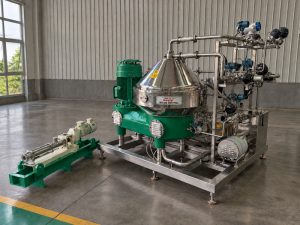
The liquid-level ring and gravity ring at the outlet can be adjusted to shift the separation interface. In practice, this is one of the most useful tuning points for seaweed processing, because the viscosity of the liquid phase changes with temperature and composition. By adjusting the outlet geometry, operators can produce either a drier solids concentrate or a clearer liquid, depending on which output is more valuable at a given stage.
Temperature control is another practical consideration. Warming the feed slightly reduces viscosity and improves separation, but excessive heat can degrade heat-sensitive compounds such as pigments or omega-3 fatty acids. The centrifuge itself does not generate significant heat, so temperature management is mainly a matter of controlling the feed condition.
Modern disc centrifuges for industrial seaweed processing are typically equipped with PLC-based control systems and human-machine interfaces. These systems manage feed rate, bowl speed, and solids discharge intervals. Variable-frequency drives allow the bowl speed to be adjusted for different slurry types, which is useful when a facility processes more than one seaweed species. Automated discharge reduces labor and ensures consistent operation over long production runs. Remote monitoring and fault diagnostics further reduce downtime, which is a meaningful advantage in remote coastal locations where technical support may be limited.
The economic case for disc centrifuges in seaweed processing rests on several factors. First, they achieve high recovery rates, often approaching complete capture of suspended solids, even when the feed is dilute. This is important because the biomass itself is the product; losses at the separation stage cannot be recovered later. Second, the solids concentrate produced by a disc centrifuge typically has a higher dry matter content than what is achievable with gravity settling or simple filtration. This reduces the energy required for subsequent drying, which is often the largest operating cost in seaweed processing. Third, the continuous operation and automated discharge reduce labor requirements compared to batch methods such as filter presses or settling tanks.
Energy consumption is also favorable. A disc centrifuge uses centrifugal force rather than heat or vacuum to achieve separation, and the specific energy consumption per unit of solids recovered is relatively low. For a typical Southeast Asian seaweed project, the combination of high recovery, low labor, and reduced drying load can translate into substantial savings over the life of the equipment.
Seaweed slurries are often saline and slightly acidic, so contact parts must be corrosion-resistant. Stainless steels such as SS304 or SS316L are standard, and duplex stainless steel may be specified for particularly aggressive conditions. The bowl and discs must be precisely machined and balanced to withstand high rotational speeds without vibration. Manufacturing quality directly affects service life and separation performance, so equipment sourced from established suppliers with verified machining capabilities is preferable.
Introducing a disc centrifuge into an existing seaweed processing line requires attention to upstream and downstream integration. Feed should be screened or pre-filtered to remove large debris that could damage the bowl or block the discs. Flow rate should be controlled to match the machine’s capacity, since overfeeding reduces separation efficiency and underfeeding wastes capacity. Regular cleaning and inspection are necessary, particularly when processing slurries with high polysaccharide content, because sticky deposits can accumulate on disc surfaces over time.
It is also advisable to conduct bench-scale or pilot-scale separation tests with the actual seaweed slurry before full-scale installation. Slurry properties vary by species, harvest season, and pretreatment method, so operating parameters optimized in one location may not transfer directly to another. Working with the equipment supplier to establish the correct bowl speed, feed rate, and discharge interval for the specific material is a practical step that improves outcomes and reduces startup problems.
GNL 2-phase disc centrifuges offer a technically sound and economically viable approach to seaweed slurry separation in Southeast Asian projects. Their ability to handle fine, viscous, and dilute suspensions makes them suitable for a range of seaweed types and processing scales. With appropriate attention to disc design, outlet configuration, temperature control, and automation, these machines can deliver high biomass recovery, reduced drying costs, and reliable continuous operation. As the region’s seaweed industry continues to grow, efficient mechanical separation will remain a critical link between cultivation and the production of higher-value algal products.