GN Solid Control has successfully delivered nine drilling fluid vacuum degassers to a European client, marking another significant step in its expansion within the high-end international oil and gas equipment market. This batch shipment underscores the growing recognition of Chinese-made solid control equipment for its reliability, technical performance, and strict compliance with international safety standards. The core of this achievement lies in the operational principles and engineered capabilities of the vacuum degasser itself—a critical device for ensuring drilling safety and efficiency.
A vacuum degasser is an essential component of the drilling mud solid control system. Its primary function is to remove hazardous gases—such as hydrogen sulfide (H₂S), methane (CH₄), and carbon dioxide (CO₂)—that become entrained in the drilling fluid during circulation. These gases pose severe risks, including potential well blowouts, fires, explosions, and toxic exposure to personnel. Furthermore, trapped gases can alter the rheological properties of the drilling mud, reducing its density and hydraulic efficiency, which directly impacts drilling progress and cost. The GNZYQ series vacuum degasser from GN addresses these challenges through a precisely engineered vacuum separation process.
The equipment operates by creating a negative pressure environment inside a sealed tank. A vacuum pump extracts air from the tank, lowering the internal pressure. Drilling fluid is then drawn into the tank through a self-priming inlet, eliminating the need for an additional feed pump. Under the vacuum, the fluid spreads and tumbles over internal baffle plates or trays. This dramatic increase in surface area and fluid turbulence causes the entrained gases to break out of the liquid phase. The liberated gases are extracted by the vacuum pump and passed through a mist eliminator or gas/water separator, which removes any carried-over liquid droplets. The cleaned gases are then safely vented to a designated, remote location, while the degassed drilling fluid is discharged back into the active mud system for further processing.
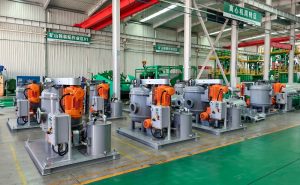
Performance and reliability are built into the design. The internal baffle system is optimized to maximize gas-liberation efficiency even under high flow rate conditions, ensuring consistent performance. Key components in contact with the aggressive drilling fluid are constructed from corrosion-resistant alloys to enhance service life and minimize maintenance. A critical feature of this recent European delivery is that all nine units are certified according to the ATEX directive, the European Union’s mandatory standard for equipment operating in potentially explosive atmospheres. This certification involves rigorous testing of the entire assembly—including the degassing tank, vacuum pump, explosion-proof motor, and control cabinet—for factors such as spark prevention, temperature classification, and sealing integrity. ATEX compliance is non-negotiable for European oilfield operations and demonstrates the product’s suitability for the most stringent safety environments.
Beyond the core degassing function, the equipment is designed for practical integration and ease of use. Its compact and modular structure facilitates installation on skids or within larger solids control systems. The unit can also be configured to function simultaneously as a powerful mud agitator, providing both degassing and homogenization in a single footprint. Operational stability is ensured through straightforward installation protocols and clear monitoring procedures. Guidelines mandate proper submersion of inlet and outlet lines, correct motor rotation verification, and system priming before startup. During operation, maintaining an optimal vacuum level—typically between -0.06 to -0.08 MPa—via an adjustable relief valve is crucial for peak efficiency. Regular weekly test runs are recommended to maintain component readiness and prevent seal degradation.
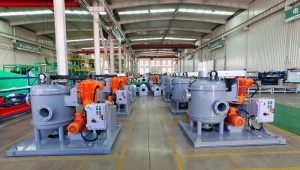
The successful export of these nine units is not an isolated event but part of GN Solid Control‘s sustained strategy to serve the European market with high-quality, compliant equipment. Over the past decade, the company has progressed from supplying individual components like shale shakers and centrifugal pumps to delivering complete, high-horsepower solids control systems and drilling waste management packages for European clients. This evolution from a component supplier to a systems integrator reflects deep technical accumulation and an understanding of complex project requirements. Supporting this hardware export is a robust service framework, including detailed multilingual documentation, remote technical support, and readily available spare parts, ensuring minimal operational downtime for the end-user.
In conclusion, the delivery of these nine vacuum degassers exemplifies how technical merit, rigorous quality control, and adherence to international standards converge to create a globally competitive product. By focusing on the fundamental working principle—efficient gas removal via controlled vacuum and mechanical separation—and backing it with robust construction and critical safety certifications like ATEX, Guaneng Solid Control provides a reliable solution for a fundamental drilling safety challenge. This transaction reinforces the company’s position as a credible and capable partner in the international oilfield equipment sector, contributing to safer and more efficient drilling operations worldwid