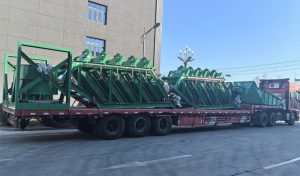
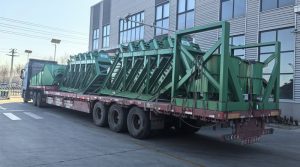
One batch of Mining Vibrating Screens Used for Iron Ore Separation in Ports

One batch of Mining Vibrating Screens refers to a coordinated system of vibration-based equipment designed to process material within a defined operational cycle. This system integrates specialized machines for feeding, screening, and dewatering to form a continuous, efficient workflow. The primary function is to use controlled mechanical vibration to separate, convey, and treat bulk materials, thereby enhancing throughput and operational reliability in mining and aggregate processing.
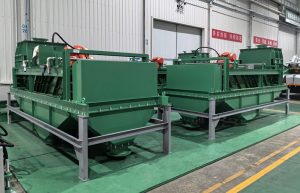
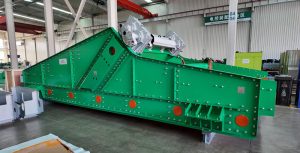
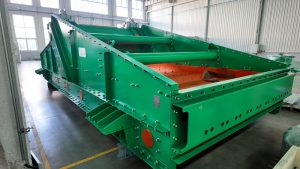
In such a batch, specific equipment is selected and configured to perform sequential tasks. For instance, a vibrating feeder supplies raw material at a controlled rate to the primary processing stage. Following this, screening equipment classifies the material by particle size. A key technological advancement in this area is the use of high-frequency fine screens to replace traditional trommel screens for scalping applications. The single-deck high-frequency fine screen model GNFG1232 exemplifies this shift. It is engineered for efficient removal of oversize debris and is equipped with an under-screen collection chute to gather the screened fines, ensuring a clean separation and minimizing material loss. This design is particularly effective for handling sticky or damp materials where traditional rotary screens might experience blinding or reduced efficiency.

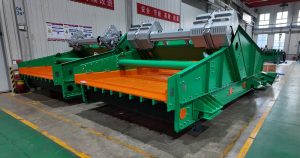
After the initial screening, material often requires further processing to reduce moisture content. This is where dewatering screens are critical. In a large-scale setup, a linear motion screen like the model GNLSZ3061 is employed for dewatering. This large linear screen uses a dual-vibrator motor configuration to generate a linear vibrating force. This motion propels the material across the screen surface while allowing water to drain through the screen panels. The GNLSZ3061 is designed for high-capacity dewatering of sand, tailings, or other slurry-type materials, producing a drier product for subsequent handling or disposal.
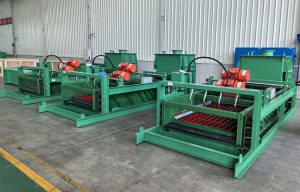
The integration of these devices into a single batch relies on precise engineering. Each machine’s operational parameters—such as vibration frequency, amplitude, and screen angle—must be harmonized based on the processed material’s characteristics, including density, particle size distribution, and moisture level. For example, the high-frequency, low-amplitude action of the GNFG1232 fine screen is optimal for precise separation of fine particles, while the robust, long-stroke linear motion of the GNLSZ3061 is suited for conveying and draining heavier, wetter loads. The system’s efficiency depends on this parametric matching to ensure smooth material transfer between stages without bottlenecks or overflow.

Structurally, these vibrating machines are built for durability in harsh environments. Frames are typically constructed from heavy-duty steel to withstand constant dynamic loads. Critical wear parts, such as screen panels, use advanced materials. Polyurethane or rubber screen surfaces are common for their abrasion resistance and ability to dampen noise. The GNFG1232’s fine screen deck and the GNLSZ3061’s dewatering panels would utilize such materials to extend service life and maintain screening accuracy. Furthermore, the drive system is fundamental. Most modern units employ externally mounted vibration motors with adjustable eccentric weights. This allows for fine-tuning the vibratory action to suit different materials without major mechanical changes.
The control and support systems are integral to a functional batch. Vibration isolation mounts are installed to prevent the transmission of oscillatory forces to the plant’s foundational structure, protecting infrastructure and reducing noise. Increasingly, these systems incorporate programmable logic controllers for automation. Operators can monitor performance metrics like motor current, vibration amplitude, and feed rate, making adjustments remotely to optimize the batch process for changing feed conditions or desired product specifications.

The transition from traditional methods, like trommel screens, to advanced vibrating screens such as the GNFG1232 offers measurable benefits. It typically results in higher screening efficiency, greater throughput per unit area, reduced maintenance due to fewer moving parts, and improved separation accuracy. Similarly, using a dedicated, high-capacity linear dewatering screen like the GNLSZ3061 ensures more effective moisture removal compared to simpler draining methods, yielding a product that is easier and cheaper to transport.

In conclusion, one batch of mining vibrating equipment represents a systematic approach to materials processing. By integrating purpose-built machines like the high-frequency fine screen GNFG1232 for precise scalping and the large linear screen GNLSZ3061 for efficient dewatering, operations can achieve a continuous, automated, and highly effective processing cycle. The success of this batch hinges on correct equipment selection, parametric synchronization, robust construction, and intelligent control, all aimed at maximizing productivity and reliability in mineral and aggregate handling.
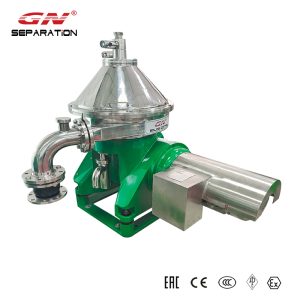
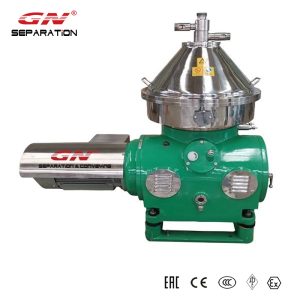
The disc separator is a core component within the GN Solids Control oil sludge treatment system, responsible for the critical task of three-phase separation. Operating on the principle of high-speed centrifugal force, this vertical centrifuge efficiently divides incoming sludge into its constituent parts: recoverable oil, water, and solid residues. Its function is not merely separation but the precise, continuous, and automated purification necessary for modern industrial waste recovery and environmental compliance.

Structurally, the machine consists of a vertical bowl rotating at high speed on a spindle, driven by an electric motor. Inside this bowl, a stack of conical metal discs is precisely spaced, creating numerous narrow channels. The entire assembly rotates at several thousand revolutions per minute, generating a centrifugal force often exceeding 10,000 times gravity. This immense force is the primary agent of separation. When oil sludge is fed into the center of the rotating assembly, it is distributed into the gaps between the discs. Here, the different densities of the components cause them to stratify under centrifugal force. The heaviest solid particles are flung outward, sliding down the surfaces of the discs to collect in a sediment-holding space at the bowl’s periphery. The lighter water phase forms a middle layer, while the lightest oil phase forms the innermost layer. Specially designed components called centripetal pumps—one for the oil and one for the water—then independently and continuously extract these two liquid phases from the rotating system, leaving the solids behind for periodic discharge.

This separation process addresses a key challenge in oil sludge treatment: the presence of stable emulsions and fine suspended solids. Traditional gravity settling or filtration often fails to break these down effectively. The high gravitational force generated by the disc separator disrupts these emulsions, forcing tiny oil droplets and water to coalesce into distinct, separable phases. Similarly, fine solid particles that would pass through a filter are compelled to settle out. The result is a significantly higher purity of recovered oil, water with a very low residual oil content, and dewatered solids. In practical terms, this translates to oil recovery rates often above 90%, discharged water containing less than 500 mg/L of oil, and solid residue with a moisture content below 20%, meeting stringent standards for reuse or disposal.

Within the Crown Power system, the disc separator typically functions as the final, or polishing, stage of separation. It is designed to handle feed material with a low solid content, usually under 3%. Therefore, it is commonly preceded by primary treatment equipment like shale shakers, decanting centrifuges, or settling tanks. These upstream units remove the bulk of the solids, conditioning the sludge into a suitable state for the disc separator’s precise operation. This staged approach maximizes overall system efficiency and protects the sensitive disc stack from clogging or excessive wear. The system is offered in various models with different throughput capacities, allowing for customization based on the volume of sludge to be processed.

Operation and maintenance are streamlined for reliability and minimal manual intervention. A key feature is the automated solids ejection system. The accumulated solids in the bowl’s holding space can be discharged at programmed intervals or based on sensor feedback, without stopping the machine. This ensures continuous processing. The system is often integrated with a Programmable Logic Controller (PLC) for automated control of the entire sequence, including feed pumps, discharge valves, and optional chemical dosing systems. The addition of demulsifiers or flocculants can further enhance separation performance for particularly challenging sludges. Maintenance primarily involves periodic cleaning of the disc stack and inspection of seals and wear parts, facilitated by a design that allows for relatively straightforward disassembly.

The advantages of using a disc separator in this context are multifaceted. Its high separation efficiency directly boosts resource recovery, turning waste into a valuable product. The quality of the separated outputs ensures compliance with environmental regulations regarding discharge or disposal. The continuous, automated operation reduces labor costs and increases overall system uptime. Furthermore, the enclosed, clean design of the equipment contributes to a safer and more environmentally sound worksite, with no exposure to fumes or spillage during normal operation.

In summary, the disc separator’s role in the GN oil sludge system is indispensable for achieving high-precision three-phase separation. It transforms a complex, often problematic waste stream into distinct, manageable, and valuable fractions. By leveraging extreme centrifugal force in a carefully engineered package, it delivers the performance required for both economic resource recovery and responsible environmental stewardship in industrial operations.

GN Vibrating Screen for Domestic Iron Mine

The application of GN mining vibrating screens in domestic iron ore projects represents a significant advancement in processing technology, addressing long-standing industry challenges related to efficiency, precision, and operational cost. This analysis focuses on the specific deployment of two key models: the GNLSP3073 Large Linear Vibrating Screen (1 unit) and the GND5Z1014 Stack Vibrating Screen (4 units), within a contemporary iron ore processing operation.

The GNLSP3073 Large Linear Vibrating Screen is engineered for high-capacity, coarse to medium separation duties, such as scalping run-of-mine ore or sizing crushed material before beneficiation. Its design is predicated on a dual-motor, self-synchronizing drive system that generates a forceful, linear motion. This motion ensures consistent material travel across the full width of the screen deck, promoting high throughput and effective stratification of particles. The robust construction, utilizing high-strength alloy steel plates and a non-welded sidewall design, is critical for withstanding the high-impact loads and continuous vibration inherent in iron ore processing. This structural integrity directly translates to extended service life and reduced maintenance downtime. For iron ore applications, this screen is typically employed after primary or secondary crushing to efficiently remove fine material or to produce a controlled feed size for downstream grinding circuits, thereby optimizing overall plant capacity.

In contrast, the GND5Z1014 Stack Vibrating Screen, deployed here as a battery of four units, is designed for precision classification and high-efficiency dewatering of finer iron ore fractions. Its defining feature is the multi-layer, vertically stacked deck configuration. This design allows a single machine footprint to accommodate up to five independent screening surfaces, each with a progressively finer aperture. Material is fed to the top deck, with each layer performing a distinct separation. This setup is exceptionally effective for the complex grading of iron ore, particularly for particles below 10mm. It enables a single feed stream to be accurately separated into multiple, tightly defined product fractions—such as -5mm, -2mm, -0.5mm, and -0.1mm—in one pass. This precise classification is fundamental to modern beneficiation processes like magnetic separation or flotation, where consistent feed particle size directly impacts mineral liberation and recovery rates. The use of flexible polyurethane screen panels on these decks is a key performance differentiator. Their high open area, combined with inherent anti-blinding and wear-resistant properties, maintains screening accuracy over long periods when processing damp, sticky, or abrasive fine iron ores, a common challenge that severely degrades the performance of traditional wire mesh screens.

The operational synergy between the large linear screen and the stack screens creates a highly efficient flowsheet. The GNLSP3073 acts as a primary workhorse, handling the bulk of the volumetric load and removing a significant portion of waste or oversize material. The prepared feed is then directed to the battery of GND5Z1014 stack screens for the critical, high-precision grading stage. This staged approach maximizes the strengths of each technology: high-volume processing followed by multi-product precision separation. The result is a system that delivers superior overall screening efficiency, often exceeding 90%, compared to legacy setups using multiple single- or double-deck screens in series. This high efficiency directly boosts the recovery of valuable iron minerals and lowers the tailings grade.

Beyond separation performance, these GN models incorporate features that address broader operational and environmental mandates in the mining sector. The stack screens’ compact footprint is a major advantage in brownfield plant upgrades or space-constrained sites, as they provide the capacity of several conventional screens in one unit. Both screen types are equipped with high-performance rubber isolation springs that effectively dampen transmitted vibrations, reducing structural loads on supporting infrastructure and minimizing operational noise. Furthermore, the stack screens are highly effective for dewatering applications. When configured for this duty, their multiple decks and controlled vibration parameters facilitate efficient drainage of water from fine iron ore concentrates or tailings slurries. This capability supports the industry-wide push toward tailings dry stacking, reducing water consumption, minimizing environmental footprint, and improving dam safety.

The selection of these specific models—one large linear and four stack screens—indicates a project designed for substantial throughput with an emphasis on sophisticated, multi-product classification. This configuration suggests the processing of a complex ore body where maximizing yield and product quality from various size fractions is economically critical. The proven reliability of GN’s drive systems, structural design, and wear components ensures high system availability, which is paramount for continuous mineral processing operations where unplanned stoppages incur significant production losses.

In conclusion, the integration of GN’s GNLSP3073 Linear Vibrating Screen and GND5Z1014 Stack Vibrating Screens provides a technically robust solution for modern iron ore projects. This equipment combination directly tackles core industry needs: achieving high throughput and precise particle size control, reducing plant footprint and energy consumption, enhancing equipment longevity, and facilitating environmentally responsible water management. The successful deployment of these systems underscores a shift toward more efficient, reliable, and intelligent screening technologies as foundational elements for improving the economics and sustainability of iron ore beneficiation in the domestic market.