GN Decanter Centrifuge and Cuttings Dryer for Africa Drilling Company

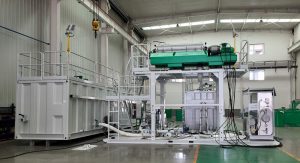
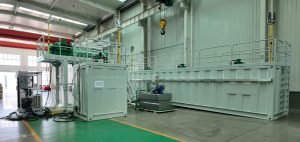
GN Decanter Centrifuge and Cuttings Dryer for Africa Drilling Company.The supplied system configuration consists of 2 units of the GNLW363CD-VFD decanter centrifuge and 1 unit of the GNCD930G vertical cuttings dryer, complete with necessary screw conveyors, a centrifuge feed pump, and a dryer wash pump. This integrated system is engineered to provide an efficient, reliable, and compliant solution for processing oil-based drill cuttings, directly addressing key operational challenges in the African drilling sector.
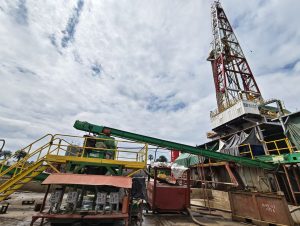

The GNCD930G vertical cuttings dryer serves as the primary stage for solids dewatering. Designed specifically for oil-based and synthetic-based drilling fluids, this unit applies high centrifugal force to separate liquid from drill solids. Its key function is to reduce the oil-on-cuttings (OOC) content to a level typically below 5%, which meets or exceeds stringent environmental discharge standards prevalent in many African nations. The dryer incorporates features such as an automatic high-pressure air knife system to prevent screen blinding and hardened alloy components in critical wear areas, ensuring sustained performance and reduced maintenance frequency in demanding field conditions. Its processing capacity is suitable for handling cuttings from active drilling operations.
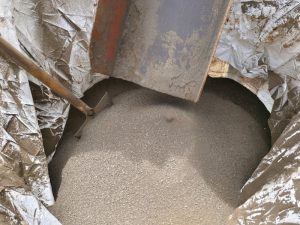
The GNLW363CD-VFD decanter centrifuge functions as the secondary, polishing stage in the treatment process. It is designed for fine solids separation and maximum recovery of base fluids. The liquid fraction recovered from the dryer is fed to this centrifuge. Its variable frequency drive (VFD) allows for precise control of the bowl and scroll speeds, enabling operators to optimize separation parameters for different mud weights and solid profiles. Constructed with corrosion-resistant materials and equipped with robust bearings and wear-protected components, this centrifuge is built to handle the operational demands and potential fluid corrosiveness found in African drilling environments. The primary output is high-quality recovered base fluid, ready for reinjection into the active mud system, and dry solids with minimal residual liquid.
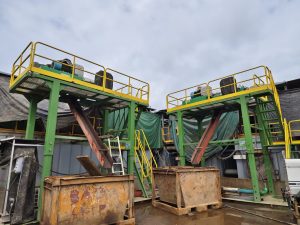
The supporting equipment is integral to creating a continuous, closed-loop system. Screw conveyors facilitate the automated transfer of wet cuttings from collection points to the dryer’s feed hopper, ensuring consistent material flow. The dedicated centrifugal pump supplies feed slurry to the decanter centrifuge at a controlled rate, while the high-pressure wash pump is used for periodic cleaning of the dryer screens to maintain optimal throughput. This auxiliary equipment is selected and sized to match the processing capacity of the main units, ensuring seamless integration.

The combined operation of this system delivers significant tangible benefits for an African drilling company. The foremost advantage is regulatory compliance. By consistently producing dry solids with low OOC, the system helps operators adhere to local and international environmental regulations regarding cuttings disposal, mitigating the risk of non-compliance penalties and supporting responsible operations. Secondly, the system drives substantial cost savings. The high efficiency of the decanter centrifuge in recovering valuable base fluids directly reduces the need for fresh fluid purchases and lowers the volume of waste requiring costly disposal. This recovery translates into a lower net drilling fluid cost per well. Thirdly, the system enhances operational efficiency. The automated, continuous process minimizes manual handling of cuttings, reduces downtime associated with waste management, and allows for faster drilling progress. The modular and robust design of GN equipment is particularly advantageous for the African context, where sites may be remote, logistics challenging, and environmental conditions harsh. The system’s reliability minimizes unplanned maintenance and ensures consistent waste processing capability.
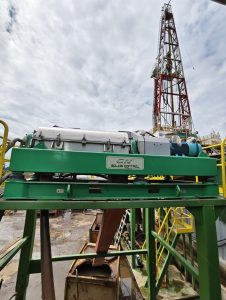
In summary, the specified configuration of two GNLW363CD-VFD centrifuges, one GNCD930G dryer, and associated conveying and pumping equipment forms a complete and effective cuttings processing solution. Its design prioritizes high separation performance, operational reliability, and ease of integration into existing drilling waste management workflows. For an African drilling company, deploying this system represents a strategic investment in achieving environmental objectives, realizing considerable cost reductions through fluid recovery, and improving overall drilling efficiency through streamlined waste handling.
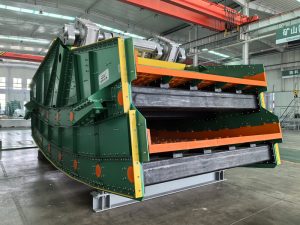
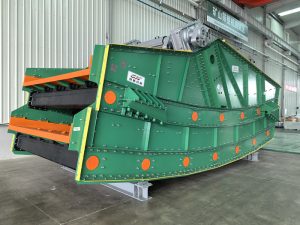
GN Double-layer Banana Screen for Iron Ore Application

The GNBD3073 Double-Layer Banana Screen is an advanced screening machine engineered for the classification of iron ore. Its design is based on the principle of equal-thickness screening, which fundamentally enhances efficiency and capacity compared to conventional linear or circular vibrating screens. The screen derives its name from the curved, multi-slope deck profile resembling a banana. This configuration maintains a relatively uniform material bed depth across the entire screening surface, significantly improving the probability of undersize particles passing through the apertures.

In iron ore processing, classification is a critical pre-treatment stage that directly impacts the efficiency of downstream operations such as grinding, magnetic separation, and flotation. Traditional systems often require multiple linear screens in series to achieve coarse, medium, and fine separation, leading to high capital expenditure, large footprints, and complex maintenance. The GNBD3073 model addresses these limitations by integrating two screening stages into a single unit. The upper deck features a steeper incline, typically between 25° and 30°, facilitating rapid stratification and removal of coarse particles. The lower deck employs a gentler slope, gradually reducing to 10°–13°, which allows for a slower, more precise separation of fine particles. This staged, variable-angle design ensures high-velocity, thin-bed screening at the feed end and controlled, deep-bed screening towards the discharge, achieving a screening efficiency consistently above 95%.


The technical specifications of the GNBD3073 demonstrate its high-capacity performance. With a total effective screening area of 41.7 square meters per layer, the machine can handle feed rates up to 2857 tons per hour. The maximum feed size is 60 mm, with upper and lower deck separation cut points typically set at 31.5 mm and 20 mm, respectively, making it suitable for classifying medium and fine iron ore particles after primary crushing. Its unit area capacity is 1.2 to 2 times greater than that of traditional screens, often allowing a single dual-layer banana screen to replace a system of two or three conventional machines. This consolidation reduces overall plant footprint, installation costs, and energy consumption. The screen is effective in both wet and dry screening applications and shows strong adaptability to ore with high moisture or clay content, minimizing screen blinding.

Structurally, the GNBD3073 is built for durability and reliability under demanding conditions. The screen frame utilizes a massive square beam construction designed with finite element analysis for theoretically infinite fatigue life, ensuring structural integrity under high vibration intensity (9–12 mm amplitude) and frequency (900 RPM). The excitation system employs either a VB box-type vibrator or NJ series exciter, fitted with premium imported bearings operating at less than 80% load capacity. This design contributes to an exciter service life exceeding 60,000 hours and an overall machine lifespan of up to 10 years. The drive system uses self-synchronizing technology, eliminating gears for maintenance-free operation. It operates at noise levels below 75 dB, with smooth vibration characteristics and a dynamic load factor of only 0.5%, minimizing stress on supporting structures.

The screen offers flexible deck configuration with various panel types, including stainless steel wire mesh, polyurethane modular panels, polyurethane tensioned panels, and metal wedge-wire panels. This allows for selection based on specific ore characteristics such as abrasiveness, moisture, and required separation accuracy. Polyurethane panels offer superior wear resistance and anti-blinding properties, ideal for wet screening of sticky ores, while stainless steel mesh provides high precision for final product sizing. Panel change-out is designed for efficiency to reduce downtime.

Intelligent monitoring is a key feature. The screen can be equipped with sensors to track vibration, bearing temperature, and motor current, enabling remote condition monitoring and predictive maintenance. Optional accessories include German rubber wear liners, secondary isolation frames, dust covers, and automatic lubrication systems.

In industrial applications, the GNBD3073 has proven its value in major iron ore concentrators. In one case study involving a multi-million-ton-per-year magnetite processing plant, three linear screens were replaced with two GNBD3073 dual-layer banana screens. This upgrade simplified the flowsheet, increased classification efficiency from 82% to 97%, reduced specific power consumption by 35%, and lowered annual maintenance costs by approximately 40%. Beyond primary ore classification, the screen is also effectively used for dewatering and desliming of tailings, final product control, and homogenizing crushed product size distribution.

The screen supports a high degree of customization. Parameters such as deck length, slope angles, feed chute design, discharge spout configuration, motor mounting position, and lubrication systems can be tailored to integrate seamlessly with existing plant layouts and specific ore processing requirements. Rated for S1 duty, it is capable of continuous 24/7 operation, meeting the demands of modern, high-throughput mining operations.

In conclusion, the GNBD3073 Dual-Layer Banana Screen represents a technologically advanced solution for iron ore classification. Its core advantages—high screening efficiency, large processing capacity, robust construction, low maintenance, and operational flexibility—make it a pivotal component for enhancing the productivity, cost-effectiveness, and reliability of iron ore beneficiation plants. As ore grades decline and the proportion of fine particles increases, the application of such efficient screening technology becomes increasingly critical for sustainable and profitable mineral processing.

GN Decanter Centrifuge System for Africa Oilfield Waste Water Treatment

The export of GN decanter centrifuges to oilfield wastewater treatment projects in Africa represents a strategic application of specialized solid-liquid separation technology within the petroleum industry’s environmental management framework. This initiative addresses the critical need for efficient, reliable, and cost-effective processing of drilling waste and produced water in a region with expanding yet logistically challenging oil and gas operations. The project’s technical foundation is built upon a modular system approach, integrating four core functional modules: the mixing module, the decanter centrifuge module, the chemical dosing unit module, and the clean water recovery and transfer module. Each module plays a distinct yet interconnected role in transforming complex wastewater streams into manageable outputs.

The mixing module serves as the initial conditioning stage. Its primary function is to homogenize the incoming wastewater feed, which typically contains a variable mixture of drill cuttings, fine solids, free oil, and emulsified hydrocarbons. Effective mixing ensures a consistent feed density and composition for downstream processing. This module often incorporates agitators or inline mixers to prevent solids settling and to facilitate the initial dispersion of conditioning chemicals. A well-designed mixing system is crucial for stabilizing the process flow and optimizing the performance of the core separation equipment.

The core of the treatment train is the decanter centrifuge module, featuring GN  decanters. These centrifuges utilize high-speed rotational force to achieve continuous separation. Within the rotating bowl, solids with higher specific gravity are forced against the wall and are conveyed by a differential-speed scroll to the discharge ports. The clarified liquid, or centrate, flows out from the opposite end. For African oilfield applications, Guaneng supplies both two-phase models, which separate solids from liquid, and three-phase models, which further separate the liquid phase into oil and water components. Key design adaptations for the African market include robust construction with duplex stainless steels for corrosion resistance, advanced wear protection on critical components like the scroll tips to handle abrasive solids, and configurations suitable for high ambient temperatures and inconsistent power grids. The proven performance in reducing solids moisture content to below 30% and achieving high oil recovery rates makes this module indispensable for waste volume reduction and resource recovery.

The chemical dosing module is an essential support system that enhances separation efficiency. It automatically injects flocculants, coagulants, or demulsifiers into the wastewater stream, typically after the mixing stage and before the centrifuge. These chemicals promote the aggregation of fine particles and the breakdown of oil-water emulsions, creating larger flocs that the centrifuge can capture more easily. Precise control of chemical type, dosage, and injection point is vital. Under-dosing leads to poor separation, while over-dosing increases operational costs and can create handling issues with the separated solids. This module’s reliability and accuracy directly impact the overall system’s operational cost and treatment efficacy.

Finally, the clean water recovery and transfer module manages the outputs. It handles the clarified water phase from the centrifuge. Depending on local regulations and reuse objectives, this water may undergo further polishing or be deemed suitable for safe discharge or reuse in non-critical applications. The module includes transfer pumps, monitoring systems for water quality (e.g., oil-in-water content), and storage or piping for distribution. In water-scarce regions of Africa, maximizing water recovery for reuse, such as for drilling makeup water or dust suppression, provides significant economic and environmental benefits, closing the loop on resource utilization.

The integration of these four modules into a cohesive system is what defines the project’s value proposition for African clients. The mixing module prepares the feed, the chemical module optimizes it, the centrifuge module executes the core separation, and the recovery module secures the valuable water output. This modular design offers flexibility; systems can be scaled or reconfigured based on specific wellsite requirements, flow rates, and waste characteristics. It also simplifies maintenance and troubleshooting, as each module can be addressed independently.

Gn’s success in deploying these systems across Africa stems from this holistic, modular engineering philosophy, coupled with an understanding of local operational constraints. The technology delivers a tangible solution to the dual pressures of environmental compliance and economic efficiency, making it a pivotal component in the sustainable development of Africa’s oil and gas sector.

GN Drilling Cuttings Treatment Equipment for Middle East Customer

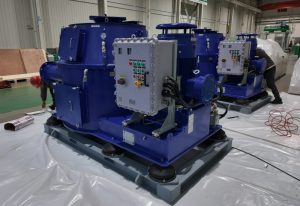
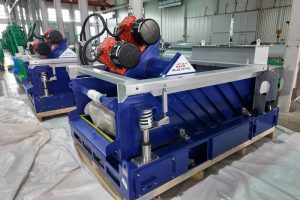
GN Solid Control, a leading Chinese manufacturer of drilling waste management equipment, has successfully expanded its market presence in the Middle East, with its advanced drill cuttings processing systems becoming a preferred choice for major oil companies and service providers in the region. A recent key shipment to a Middle Eastern client included three units of the GNZS594K High-G Drying Shaker and two units of the GNCD930G Cuttings Dryer. This equipment combination represents a core, high-efficiency solution for meeting the region’s stringent environmental regulations and operational demands for drill cuttings treatment.

The GNZS594K High-G Drying Shaker is engineered for superior solid-liquid separation as a primary treatment step. Its enhanced vibratory structure generates high G-forces, effectively removing free liquids from drill cuttings. This process significantly reduces the volume and liquid content of the cuttings, thereby decreasing the load on subsequent processing equipment like the cuttings dryer. Its robust design is critical for handling the abrasive nature of drill cuttings and ensuring stable performance in the high-temperature conditions typical of Middle Eastern oilfields.

The subsequent treatment stage is handled by the GNCD930G Cuttings Dryer, a centrifuge-based system designed for ultimate drying. Operating with a separation factor of up to 420 G, it processes the pre-treated cuttings from the drying shaker to drastically reduce the oil-on-cuttings (OOC) content. This machine is capable of consistently achieving OOC levels below 5%, a performance standard that complies with and often exceeds local environmental disposal requirements. The efficient separation allows for the recovery of base oil, which can be recycled back into the drilling fluid system, leading to direct cost savings and reduced environmental footprint.

The synergy between the High-G Drying Shaker and the Cuttings Dryer creates a highly effective processing line. This modular setup allows for a continuous, automated workflow: cuttings are fed onto the shaker for initial dewatering, and the partially dried solids are then conveyed to the dryer for final treatment. This results in a dry, stable solid phase that is suitable for safe disposal or potential reuse, and a recovered liquid phase that can be recycled. For Middle Eastern clients operating in remote desert or offshore environments, this reliability and efficiency translate into minimized downtime, lower waste hauling costs, and simplified compliance with environmental audits.

Durability and ease of maintenance are paramount for equipment deployed in the Middle East’s harsh operating conditions. GN’s equipment is constructed with high-grade, wear-resistant materials, such as stainless steel in critical areas and replaceable hard-faced alloy components on wear parts. Features like anti-clogging discharge ports and reinforced structural elements ensure longevity and reduce the frequency of maintenance interventions. Furthermore, the systems are designed with modularity in mind, enabling quick replacement of components and minimizing operational disruptions.

Beyond the hardware, Guaneng’s success in the Middle East is bolstered by its commitment to technical support and service. The company provides comprehensive remote assistance and has established a responsive supply chain for spare parts, ensuring that clients can maintain peak operational efficiency. The proven performance, cost-effectiveness, and reliable support of GN’s drill cuttings processing systems have solidified its reputation as a trusted partner for the oil and gas industry in the Middle East, enabling clients to achieve their opera tional and environmental sustainability goals effectively.